Showing posts with label Black Metal. Show all posts

Wednesday, February 12, 2014

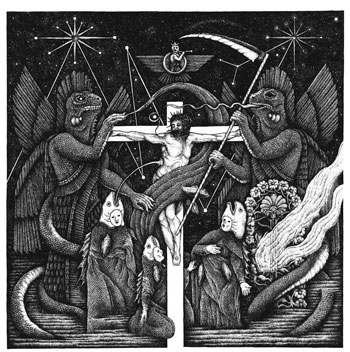
Inquisition- Obscure Verses for the Multiverse(2013)

Inquisition- Obscure Verses for the Multiverse

Inquisition releasing a new album isn't just a big deal among the initiated in the cloak and dagger crowd.  It's a time of furious infighting over Dagon's vocal transformation from early releases like Incense of Rest to more recent releases like Nefarious Dismal Orations.  It's a time when the zealot seeks to destroy "the false"and disinterested, who ask: "What's the big deal?  Now Sunbather, that's awesome."  It's a time of comparisons between different era's, different guitar sounds and different song writing techniques spanning a career of consistent excellence and divisive interpretations.

Obscure Verses for the Multiverse is not just another release.  It's an event.

Don't mistake this for hyperbolic praise for Obscure Verses.  It's merely an observation.  In truth, Obscure Verses is as rock solid and listenable as any release they band have produced, occasionally ascending to something greater.  It's melodic, dissonant, big and ballsy, featuring the cleanest and punchiest sound the band have ever produced, though not quite as sonically massive or warm as Ominous Doctrines of the Perpetual Mystical Macrocosm.  It's got equal appeal among traditionalists, Black Metal newbies with a hard on for Marduk and those craving walls of atmosphere; this is the most Populist Inquisition release to date.

This isn't a bad thing: Inquisition, newly minted to Season of Mist and releasing Obscure Verses with the biggest budget the duo have ever enjoyed, have every reason to expand their audience.  The fact that they are doing so while remaining 100% true to the sound and style that made them the dark God's of Black Metal atmosphere and intensity is all the better.  This is vintage Inquisition magic: riffs, riffs and more riffs, filtered through a fog of cosmic gas and inter- dimensional diffuse and regurgitated by The Old Gods into sound waves big enough to smother lungs and snap bones.  Dagon rants and raves in alien tongues like an extraterrestrial minister lost in a demonic trance, while a wall of dense sound crashes down upon you.  The budget may be bigger, the guitar sound cleaner and the drums punchier, but this is simply Inquisition rendered in a new light.

Dagon's guitar is a weapon of mass destruction; a mighty axe, crafted from the nucleus of a long dead comet.  It is the lifeblood of Obscure Verses, the center of it's might gravitational pull, and strikes with the force of planetary inertia.  Which is both the most excellent aspect of Obscure Verses and it's biggest failure: this is perhaps the least imaginative and dynamic Inquisition release to date.  Outside of some surprising vocal variety on "Darkness Flows Toward Unseen Horizons," this album feels largely like a complete rehashing of the bands previously ventured paths.  It's hard to argue with the results in the long run, but when stacked up to a discography of almost endless brilliance and consistent redefinition of their sound, Obscure Verses feels like the second time for the first time in the bands legacy.

Yet if Obscure Verses doesn't completely dominate your listening for at least a week, hang up your spurs and buy a Lorde album... or Black Eyed Peas.  Whatever the kids are listening to.  This is such a purely energetic album, bristling with a true love for Metal and what makes this genre so god dame awesome is on full display.  The band are such master technicians, such master song writers and craftsmen, that anything they touch will exude an artistic confidence and listenability few bands can match.  Obscure Verses is more a testament to the artist who created it than the art itself.

Rating: 8/10

Friday, September 13, 2013

Ogdru Jahad- I

Ogdru Jahad- I

A savage and bestial grind from beginning to end, Ogdru Jahad's I is an album which fits comfortably into the mechanically putrid rot and filth of the scene, going through the ritualistic motions for a solid, uninspiring 30 minutes.  Complete with blasphemous artwork and Lovecraftian references, I is an album as predictable as it ugly, minus of course the brilliant cover art, though this is another staple of the scene that shouldn't be surprising, or the limited edition clear vinyl the album comes on(only 200 copies of course).

That's the thing about I that I find far more fascinating; its an album that feels like it was created in some sort of Ross Bay Cult-styled atomic generator which is pushing out filth encrusted, bullet-belted abominations in droves.  I itself couldn't be a more basic album; it sounds like Blasphemy, Conqueror and Archgoat, with hints of Thrash and First Wave Black Metal mixed in for extra credibility.  It features no unique traits to speak of, other than perhaps a  pair of songs which sound like they feature the same exact riff played only slightly differently in "Unholy Blessings" and "Empty Jehovah."  There are some killer tracks to be sure, with the groovy and barbaric "Weeping of Angels" and the utterly uncompromising and blistering "Necromantic Rites" standing out a solid highlights.  "Necromantic Rites" in particular features a hint of dissonance and mildly complex song structure, though it's fleeting and the grind will overwhelm all originality before the end.

What's more fascinating about I is how neatly in fits into the current Bestial Black/Death scene; another "super group" release featuring members of a dozen other bands including the mighty Lucitation and Sadomator.  It features glorious cover art courtesy of Alexander L Brown, whose done the artwork for dozens of other similar albums.  It's released on one of the premiere labels for such albums in Iron Bonehead Productions, and comes in both black and limited edition clear vinyl(it's since been released on CD as well).  You can check the boxes both sonically and culturally with I and neatly place in on the bookshelf in between your Gods of War re-press and your H.P. Lovecraft biography, never to be listened to after a few initial spins again and more than likely to end up on discogs.com for triple what was paid for it new 5 years from now.

In an of itself, Odgru Jahad's I is an inoffensive album which has some limited visceral intensity, but it's an album so comfortable and safe that it feels stale and bland right out of the gate.  From the very second the opening sample fades out and the opening riff slices through the air, the next 30 minutes is laid out directly in front of you, the bloody puzzle pieces stitched together smoothly.  No bumps, no pauses and no mercy.  And no fun.

Rating: 5.5/10

Friday, July 12, 2013

Vemod- Venter på stormene(2012)

Vemod- Venter på stormene

Ethereal and twisted, Venter på stormene provides a hypnotic back drop of dissonant, melodic guitars and tortured, emotional vocals.  The Norwegian two-piece combine snippets of the primitive Second Wave sound, particularly influenced by Burzum and Ulver but also a bit of Darkthrone, with a heavily modern Ambient Black Metal deluge inspired by the genre's titans.  It's not revolutionary nor is it deserving of exhalation, but fans of the genre will find much to love about Venter på stormene twisting forest paths and screaming dead lost in the fog.

 Above all other adjectives to describe Venter på stormene, hypnotic would be at the top of the list; be careful blasting this record while driving along a sorrowfully alone highway in the dead of night, because you'll likely be coming face to face with a ditch(I nearly did).  A whispering, hollow and noisy production sound combines with inescapable repetition to cast upon the listener an all encompassing trance that is difficult to break.  The vocals are overwhelming, mixing shrieks, moans, guttural growls and effective clean singing to further intensify the atmosphere, while the highly repetitive drumming provides the foundation for this dreamscape of ice and fire.

Those looking for Black Metal which predicates itself on ultra tight, fast moving musicianship and lots of complexity will struggle to find much of value with Venter på stormene, but Vemod do a very good job of adding some Second Wave grime and brutality to their sorrowful, melodic sound.  The title track and second track, "Ikledd evighetens kappe" both feature a strong foundation of blast beats, throat ripping vocals, slithering bass and shrieking, thin guitars to go with the ambient, soaring compositions used to break up the endless, mechanical repetition.

Mechanical, but powerful and emotional at the same time.  Truly the strength of Venter på stormene comes from this facet of it's sound; despite the overall lack of complexity and the bare-bones content of the songs, Venter på stormene is an emotional, profound experience.  It's the very back-bone of the Ambient Black Metal sound, but far too many new artists utterly fail to achieve any sort of real emotion.  Often, they sound more like a boring art-house Drone project for their college performance art class than a truly absorbing Black Metal beast, but Vemod have clearly mastered this concept on Venter på stormene, while developing a sound which should appeal to a more diverse group of Black Metal fans.

That said, "Altets tempel" is a complete waste of track; mostly a collection of various Ambient Black Metal tropes that don't involve any of kind of Black Metal, but instead a grouping of generic melodic leads and keyboard work.  At nearly 13 minutes long, it sucks the energy that the previous two tracks electro-charged the room with.  These incredibly boring, lazy compositions are far to common in the genre and a major black eye for Venter på stormene.  The final track, "A stige blant stjerner" is a stronger ambient piece, featuring more straight up Black Metal and some strong melodic leads, but it likes energy and power overall.

Such as it is, Venter på stormene is still a fine overall album.  The failings of it's second half do little to diminish the raw intensity and profound introspection of the first half, and in the right atmosphere this album will simply cast a spell of confusion and dreams over you that is nearly impossible to break.  Fans of this genre, and purists looking for something more dynamic while still firmly entrenched in the old ways of the Fatherland of Oslo will find appeal in Venter på stormene's rotted, ice-tortured orchards and hard, lifeless soil which glows an unholy twilight across the night sky.

Rating: 8/10

Sunday, June 2, 2013

Antediluvian- λόγος(2013)

 
Antediluvian- λόγος
 
Few bands receive as much universal praise and are endowed with as many accolades as the mighty Antediluvian, and deservedly so.  The bands last two releases, Through the Cervix of Hawaah and the brilliant split with Adversarial Initiated in Impiety as Mysteries, have set the standard for atmospheric, suffocating Occult Black/Death; terrifying and twisted in ways few artists have been able to match while developing a sound which sits on wholly unique ground.  Its been a truly horrendous transformation for an artist which started out as merely another Incantation-clone, and as λόγος(Logos) shows, it is a metamorphosis which is not yet complete.
 
Its a very subtle evolution on λόγος from the bands two previous albums; crushing, massive Black/Death riffs, twisted progressions, wild and chaotic drumming tempos and Nabucodnosor's squishy guttural vocals are still the centerpiece of Antediluvian's sound and λόγος is no exception from the bands two previous releases.  The devil is(probably literally) in the details here; λόγος is a more technical, chaotic, avant-garde release than I was really expecting from these Canadians.  While Through the Cervix and Initiated in Impiety had these inhuman, disjointed chaotic moments, they were tempered by plenty of rhythmically un-obtuse sections and lots of Doom-y repose.  Yet these moments have almost completely disappeared from λόγος, and instead the album is dominated by the gnarled and truculent compositions, creating a level of density few albums possess.
 
Its probably seems insane to think of anything from Antediluvian as "catchy," but going back to Through the Cervix in particular I was struck by just how many memorable many of the tracks were.  The crushing grooves of "Luminous Harvest" and the blistering yet simple assaults of "Turquoise Harvest" could really stick with you well after the fact, and despite the albums truly insane moments and thick atmosphere it was an album which felt grounded in good old fashion neck snapping Death Metal.  λόγος on the other hand is far more relentless and rhythmically chaotic: the drumming of Mars Sekhmet is far more turbulent and disjointed, and rarely is there ever a moment to hang your hat on, while the noisy elements of Antediluvian's sound have far exceeded previous releases.  Her performance on the kit is daunting to be sure, and those looking for neck surgery are the only ones who should even attempt to do anything even close to head bang.
 
The subtly of this is key here, and λόγος still feels and sounds very much like an Antediluvian release.  "The Ash and the Stars" twists and turns in the hurricane winds, and evokes the nightmares of ancient spirits with dissonant leads and swirling riffs.  "Nuclear Crucifixion(Turning the Spear Inward)" has some of the few remnants of catchiness and memorability left on this album, though it would have been the most chaotic track on Through the Cervix; it has some driving Incantation-style tremolo-picked assaults and some softer, less compositionally dense moments that offer a small reprieve from the onslaught.  "Towers of Silence" is truly an abomination, a bleak and devastating slice of Blackened Death Metal with perhaps the most ironic title ever, as the density and noise on this track is simply overwhelming.
 
If I can levy any major complaints at λόγος, they lie with the production: the drum sound is very hollow and while balanced with the mix seem loud, especially the snare, and the guitars sound much thinner and uglier than the warmness of Through the Cervix or Initiated in Impiety.  With how chaotic and dense the drumming is, the drum sound can become very obnoxious.  Its not a bad production mix per-se, but in comparison to previous releases this might be my least favorite since the bands early, nearly unlistenable demo material.
 
But from a song writing perspective, I find λόγος to be a slightly inferior album to Through the Cervix of Hawaah.  I find myself impressed with the bands continued foray to relentless chaos and utter hatred for their listeners, but part of me misses those truly memorable moments of the past.  I get far too much of a Portal vibe from λόγος, and while this album quite easily destroys anything that Portal have ever released on every conceivable level, it still suffers from too much noise and inhuman tempos to be truly enjoyable all the time.  λόγος offers more good than bad to be sure, but be prepared for an album which will quite literally hate you to death.
 
Rating: 8.5/10

Saturday, May 25, 2013

Consummation- Consummation(2012)

Consummation- Consummation

As if the Australian Death and Black Metal scene was not strong enough, loaded with a veritable All-Pro group of musicians and bands, here comes the mysterious and slithering mass known as Consummation with their brilliant, haunting and dissonant s/t debut.  Featuring a pair of mighty Satanic hymns for truly unclean worship of old spirits whose names cannot be uttered, Consummation is one of those brilliant little releases that despite it's minuscule running time delivers more than many full-length albums.  Everything here works, from the song writing to the musicianship to the production, making Consummation a little masterpiece whose value is diminished only by it's format.

"Heautontimoroumenos" shows off the strongest elements of Consummation's sound right off the bat: hazy, dissonant and mildly technical riffing, thundering and massive drums, earth shattering low end and vicious, tortured vocals which run the gauntlet of shrieks, guttural growls and deathly moans.  Consummation has a sound firmly rooted in the Australian Black/Death style, but flourishes of other influences shine through from time to time, whether it's the squirming and swimming dissonant leads and "pulpit preaching" vocal patterns that bring to mind later Funeral Mist or the Celtic Frost like moments of Doom-laden, percussion driven madness, and all of these elements are present on "Heautontimoroumenos";  The thundering percussion in particular reminds me of the Celtic Frost song "Dawn of Meggido" from To Mega Therion.  A better combination of spine-tingling solos and sheer face melting blackness you will not find, and this track without question the stronger of the two.

"Rend the Ain Soph" has a very strong Orthodox Black Metal vibe to it, featuring a near impenetrable wall of dissonant fuzz and unholy vocal assaults.  The drumming here is phenomenal, absolutely leveling the listener with power and control.  I wouldn't be surprised if many a drum head needed replacing, because each strike of the snare or tom feels like a battering ram demolishing a castle gate.  Everything works in brilliant conjunction to create a dense, foggy atmosphere; a ritual of burning flesh in a desiccated cathedral where nothing holy remains.  "Rend the Ain Soph" isn't quite as catchy or as head-bangingly brutal as "Heautontimoroumenos," but you'll still feel as though you bathed in blood and goat urine by the time it ends.

Consummation doesn't really have enough meat on it to truly transcend into classic territory, but the quality of the limited quantity cannot be denied.  Finding a way to stand out in the Australian Black/Death Metal scene is no easy task, but Consummation stands as one of the more impressive debuts I've heard.  It's serpentine song-structures, effortless atmosphere and commanding, unique sound is refreshing and highly enjoyable, and makes this a demo well worth your time and money.

Rating: 8.5/10

Monday, April 29, 2013

Cultes Des Ghoules- Henbane(2013)

Cultes Des Ghoules- Henbane

The Polish Necro Warlocks of Cultes Des Ghoules are back, and this time they a more learned, cunning and sadistic force for the dark arts, acting as His(read: SATAN) Unholy Agents on this dying, divided Earth.  Henbane is an album made of equal parts dense atmosphere and classic concepts, drawing equally from First Wave Black Metal, Second Wave Black Metal, Ross Bay Cult styled Bestial Black Metal and thundering old-school Doom Metal to create a sound which no other band can truly match.  And aided by a brilliant conceptual identity which reeks of rot, witchcraft and occultism, Henbane is the perfect mood music for late nights lost in the misty woods, dripping blood upon the altar of sacrifice and preparing one's body to entertain the ancient spirits.

Compared to Haxan, Henbane seems significantly softer at first: the production sound is cleaner, more balanced and far less dense, and the bands more Bestial elements have taken a back seat to a greater focus on riffs, introspection and mystical energies.  But once the incantations of Henbane begin to shake and rattle your very bones, you'll soon realize the massive error in judgement you had made.  Sure, it's a more approachable album than Haxan, Odd Spirituality or Spectres Over Transsylvania, but its also a more fully realized, mature and utterly devastating album than anything Cultes Des Ghoules have accomplished to date.  The atmosphere is tremendous, using a combination of spine-shattering low end, diverse arrangements, ambiance and perfectly controlled repetition to envelope the listener in a shroud from which they might never escape.  Henbane also frequently and masterfully makes use of sounds and samples to further amplify the already over-whelming atmosphere on the album, creating moments of somberness, insanity and suffering.  Whether it's the ringing of a Death Knell, the chants of withered witches or the bubbling of a rusted cauldron, the use of these classic and spooky conventions further intensifies Henbane and gives it a rather charming novelty which is impossible to deny.

Though it's still all about the riffs with Henbane.  It's got more of them than you can shake a crucifix at: thundering, Doom-y, Thrash-y, dissonant, melodic, noisy riffs which give off an equal mix of To Mega Therion, De Mysteriis Dom Sathanas and Angelcunt(Tales of Desecration).  "The Passion of a Sorceress" drips grime and filth, and the bass and drums combine to flatten mountains: at 2:25, prepare to have your skull force-fucked by damnation right off your slender, weak spine.  Vocalist Mark of the Devil is simply inhuman as he moves from yelps, shrieks, growls and moans.  He brays at the Moon and screams like his testicles have been forcibly removed, he chokes on his own tongue and whispers ancient enchantments into your ear.  He simply dominates this album, and his ancient and desiccated style fits perfectly with the tomb-dwelling riffs.  "The Devil Intimate" becomes a truly terrifying sojourn, led through the bowels of Hades by the hand of Virgil, and slowly builds to a horrifying and frozen crescendo in the icy halls of the Ninth Circle.  Once again, Mark of the Devil pulls out every vocal trick at his disposal and acts as the most ferocious and demented barker ever, while the skull crushing riffs and horrifying organ(so fucking wicked) act as a gory and pestilential back-drop to the madness.

Awesome honestly doesn't even begin to describe what Cultes Des Ghoules have achieved with Henbane.  This album is such a fresh and fascinating take on classic Extreme Metal sounds, as well as classic Horror elements, which makes it one of the most enjoyable and charming Black Metal albums I've ever heard.  For an album which creates such an unholy and inhuman atmosphere, Henbane is also an album which, for lack of a better term, is a hell of a lot of fun.  Its an album which conjures up old fears from your childhood, an album which brings you back to the first time you head-banged to a killer riffs and an album which can appeal to all the musical complexity you desire in your advanced age.  All aspects are satisfied, and the Devil will get his due...

Rating: 10/10

Monday, April 15, 2013

Desert Rot: Doth- Datura Wrightii(2012)

Doth- Datura Wrightii

Over the next several weeks, Curse of the Great White Elephant will be doing some spotlight reviews for Extreme Music acts located in Arizona.

Why?  Because Arizona's local music scene, and particularly it's local Extreme Music scene, is mostly terrible.  There is a reason why bands who gain any measure of success in the AZ either move the fuck out(Graves at Sea, Vektor) or break-up(Vehemence): because the AZ scene can be incredibly toxic at times, sucking the life out of bands and artists who try to reach a greater audience.  The reasons for this are numerous: AZ largely lacks a strong youth culture and is populated by migrants from other states who would as soon leave and head to California, Oregon or New York and pursue their musical dreams there.  Cities and towns in AZ are often great distances from each other, and getting together with like minded musicians can be both time consuming and cost prohibitive.  As someone who was in a band, and had to drive 15 miles just to get to practice and sometimes 100's of miles just to play at an anarchist bookstore without pay, being in a band in AZ and merely being able to focus on the music can be difficult.

But it's not all bad.  Since I quit following the local scene, things have started to pick up just a bit.  AZ is experiencing a bit of an upswing in it's local Extreme Music scene, and since this is where I live and since I often bitch about the state of the local scene, I owe it to the bands in the AZ to support them and help build up the scene in my own little way: by being a critical, nit-picking asshole about their demos.  So welcome to out first ever Deseret Rot segment.

Doth are a mysterious Tempe, AZ Black Metal band with very little in the way of available information on them.  Signed to Phoenix based record label Tagobella, Doth play a style of raw, atmospheric Black Metal which is not easy to pigeon-hole.  It's far more throat-slicing, nasty and aggressive than the Liturgy's of the world, yet has a more modern and progressive feel than the Black Twilight Circle and their LLN-esque traditionalism, falling somewhere in a strange, caustic middle-ground populated with trumpets and insane, swirling, Death Metal-infused riffs.  At times eerily melodic, at other times simply head smashing, Datura Wrightii is a limited experience at only two songs, but also dynamic enough to be engrossing.

The title track is by far the better of the two, and comes exploding forth with the most devastating riff on the album, one heavily influenced by Blackened Death Metal and inhumanly ferocious.  It quickly begins running the gauntlet between grimy and atmospheric traditional Black Metal riffs and haunting, melodic and modern atmospheric compositions, as well as the most effective use of a trumpet I have ever heard in a Black Metal song.  It's an absolutely massive track, slamming like a meteor into a Russian woodland and leveling everything for miles around.  The vocals are powerful and deranged, and the drumming, while a bit raw and sloppy, is also explosive and thunderous.  It's the kind of track that gets heads banging and blood pumping, and it's a damn fine effort which fully explores the bands musical palette.  "Schist Crevice" doesn't fare quite as well: the production quality is clearly much different and generally very poor.  It lacks almost all of the aggression of the title track and stumbles in a failed effort to be hyper-atmospheric and noise-y.  It has some haunting moments, particularly in the last minute or so when the noise begins to crescendo into what sounds like a choir of banshee's, and the vocals remain vicious and unhinged, but the horrendous drum sound(sounds like a drum machine) is a major buzz kill.

Doth are planning to begin recording a new album shortly, and if the album bears any resemblance to the title track of Datura Wrightii, than we are going to be in for a treat.  Doth are a band which don't sound like any other Black Metal band from Arizona that I have heard, and have serious potential to become one of the big new things in Atmospheric Black Metal.  That potential is not completely realized here, but the title track alone is worth any Black Metal fans time.

Rating: 7/10

Be sure to check out Tagobella's Bandcamp here

And be on the look out for more Desert Rot segments.

Monday, March 18, 2013

Vassafor- Obsidian Codex(2012)

Vassafor- Obsidian Codex

For the weak, I have a message: get the fuck out.  Obsidian Codex is simply too much for you.

Those looking for an album which in any way caters to the casual or accommodates the uninitiated simply need not apply for this review or Obsidian Codex, the latest masterwork from New Zealand two piece Vassafor.  The long running project, which formed in 1997 but has had a very irregular release history, have crafted a masterpiece so thrilling and mesmerizing that working through it's incomparably dense facade becomes a journey in and of itself.  In fact, describing Obsidian Codex and it's 96 minute running time(you read that right) as a "journey" is about the best description I can formulate: Phil Kusabs and Ben Parker(known as VK and BP) take us on a musical adventure which features terrifying abominations, hellish landscapes and twisted black forests inundated with freezing snow, where moments of beauty and emotion are few but present, the driving force that keeps us on the path to this massive quest's ultimate conclusion.  It is in no way an easy album to enjoy; it will pummel and suffocate all who challenge it, and test the endurance of anyone foolish enough to take it lightly.  But it's also one of the most worthwhile musical experiences to be found in Extreme Metal of any genre.  Obsidian Codex is simply a masterpiece removed from needless classification beyond "awesome."

Stylistically, it's not hard to pick out the genres and artists which influenced Obsidian Codex, but everything here is put together in such a way that those influences feel like they are being transformed by Vassafor, molded and shaped into effective new tools for the song writing mechanism, beyond the well worn instruments that have been continuously reused for the same purpose again and again.  At the most "brass-tacks" level, Vassafor could be described as "Occult Blackened Death/Doom," but such a classification simply misses the mark that the band has set with this album.  The atmosphere is thick to the point of solidification, the creepiness of the compositions is so spine chilling that ice forms on the flesh and the unshakably somber moments, driven by smothered melodic leads and some deeply emotional compositions, brings about occasional moments of truly subdued beauty; a fallen angel, wings broken and flesh cleaved, laying amongst the ash and crying silver tears.  Of course, Obsidian Codex has plenty of good old brutal, bestial and even Thrash-y moments that reminds you that Mr. Kusabs has played with the likes of Blasphemy and Diocletain in his long musical career.  And you can note that all of these elements are right in the very first actual song on the album, "Rites of Ascension," and continue to appear throughout the album, culminating in the truly epic monster known as "Nemesis," which starts with a short but incredible woodwind intro(unsure of the exact instrument) which sets the tone for a 23 minute epic of unparallelled  proportions.

I've often complained about extremely long songs, and "Nemesis" certainly fits the bill of an incredibly elongated piece that runs the risk of going disastrously off the rails.  But that's the glory of "Nemesis" and the other epically long tracks on Obsidian Codex: they are perfectly fleshed out with a combination of ambiance and ideas that they never grow stale or lose the listeners interest.  Tracks dance between tempos and riffs with perfectly calculated brilliance, showing a level of song-writing which transcends what most artists could even hope to achieve.  "Sunya(Void  Paradox)" maintains a driving, aggressive rhythm throughout, showing a more take no prisoners approach to song writing that instigates furious bouts of relentless head-banging and stands in stark but effective contrast to the more Doom-y aspects of the record, while the aforementioned opening track "Rites of Ascension" features some truly horrific yet oddly haunting compositions which give off an unhinged and ritualistic intensity.  And the final real track, Makutu(Damned to the Deepest Depths)" starts off with a tribal, ritualistic drum pattern before morphing into an unholy fusion of Blasphemy and Portal.  And it ends with a slice of Sludge, yeah Sludge, which just adds icing to an already maggot ridden, gory cake of true nihilism All of these tracks are well over the 7 minute mark, yet never fail to entrance for a single moment.  It's almost stupefying.

I mentioned the albums 96 minute running time, and that will automatically create a barrier of entry for many.  Truth be told, I could see why a lot of people simply wouldn't like this album, or even hate it.  Obsidian Codex is one of those albums where the creative direction of the artist is encapsulated to the point where it offers no leeway to the listener, a "my way or the high way" style of song-writing which some will find dull, others obnoxious or even offensive.  Even the ambient tracks go for several minutes, and the album leans heavily on them to help intensify the already dense compositions.  And while the production is fairly accessible, especially by the standards set in this particular genre, and many of the riffs invitingly familiar to fans of bands like Diocletain, Antediluvian or Mitochondrion, Obsidian Codex is an album defined by excess and disregard for the listeners time or sanity.

Yet for all of Obsidian Codex's excesses, for all of it's density and disregard, its an album built mostly on accessible, inviting riffs and enjoyable variety.  Every track feels intertwined, yet all of them also feel distinct and unique when compared to each other.  And while this album was clearly meant to be experienced front to back in one single sitting, each of the actual musical tracks on Obsidian Codex stand on their own feet and can be enjoyed and replayed independently of each the whole album experience.  This is perhaps Obsidian Codex's greatest triumph, and a true rarity in this particular genre, where the whole album experience is the rule and playability is more often than not the exception.

I hesitate to use the word "perfection" here, but in many ways Obsidian Codex is the perfect album: 
perfect in it's atmospheric and thematic presentation, perfect in it's execution and musical competency, perfect in it's song-writing and production.  Obsidian Codex is the ultimate realization of a single musical vision being shared by two musicians who are working as a single, cohesive creative force.  It's an absolutely stunning album, one whose flaws are so few and far between that mentioning them is simply pointless beyond the need to be typed here; hyperbole be damned, Obsidian Codex is unlike anything I have ever heard.

Rating: 10/10

Friday, February 15, 2013

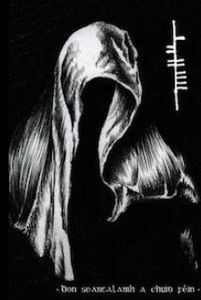
Sodb- Don Seantalamh a Chuid Féin(2012)

Sodb- Don Seantalamh a Chuid Féin 

Featuring a classic Black Metal sound which occasionally dips into the modern for moments of true inspiration, Sobd's debut demo Don Seantalamh a Chuid Féin will at times struggle to maintain a consistent pace of excellence, but when it peaks it towers over the listener with truly glorious arrangements.  Hailing from Ireland, Sodb's sound should at the beginning feel instantly familiar: elements of Emperor, Gorgoroth, Tsjunder and Shining all show themselves throughout the demo and provide much of the backbone for Sodb to explore darker, more melancholic or violent compositions.  It's an impressive demo from beginning to end no doubt, even if it doesn't consistently make a positive impression.

The first thing that stood out was the surprising musicianship featured on Don Seantalamh a Chuid Féin: I was consistently blown away by the individual performances on the album, particularly bassist Irene Giragusa, whose twisted basslines slither and squirm throughout the songs yet are never lost in the flurry of riffs and blast-beats.  This is largely due to the brilliant production here, which is absolutely mind-boggling for a debut demo and a band's first release.  The mix is even yet none of the rawness is lost in the guitar sound, while the drums sound phenomenal and completely raw while remaining at the perfect level.  The vocals are perhaps a bit high in the mix, and are also perhaps the least impressive aspect of the bands performance: there's a bit too much reverb on them, and they sound somewhat over-produced in comparison to the rest of the instruments.  The vocals are not bad per-se, but a more raw, throat-ripping performance might have better suited the sound that Sodb have developed.

Outside of the technical aspects however, Don Seantalamh a Chuid Féin suffers from a bit of what I like to call "the songs are too fucking long."  Long songs are an incredibly difficult thing to do, and many artists simply fail miserably when they attempt to go over the five minute mark: songs either become a mess of random experimentation or brutal, endurance-testing triathlons of repetition, and in both cases it's because the band ran out of ideas.  These failings are not extreme nor unforgivable on Don Seantalamh a Chuid Féin, but they are present, especially on the first two tracks.  "Don Seantalamh a Chuid Féin" runs out of steam about half way through and muddles about for about three minutes in a mire of random melodies, sudden starts and stops, and general apathy before it peter's out, while "Aigre Ré" suffers from poor use of repetition and far too much melodic noodling.  Both tracks start strong but end weakly, and show that Sodb still seem to be feeling things out.

But things ascend quickly with "Tethered," a brilliant piece of Norwegian and Swedish influences that heads in some surprising directions.  Starting with a brilliant acoustic and melodic intro, "Tethered" weeps atmosphere and envelops the listener in darkness; the proverbial blizzard in the dead woods.  One hears the influence of Emperor and Shining clearly, but "Tethered" also has some interesting and expertly used elements of modern Atmospheric Black Metal to flesh out the minutia.  There is a hint of Wolves in the Throne Room's rustic woodland-hymns and even a bit of Shoegaze-y ambiance ala- Krallice at work on "Tethered," though it's all very subtle and worked organically into the composition.  "Old and Withered Form" is far more traditional, but it benefits from it's somewhat shorter running time and straight up, Gorgoroth-style neck slicing attack.

 Don Seantalamh a Chuid Féin may not be perfect, but without question this is one of the more impressive debut's I've come across.  It's certainly one of the most listenable Black Metal albums in a while, featuring an even production and a classic, well thought out sound featuring plenty of melody.  Those looking for reverb-pinged snare drums and endless armies of grimm ghouls may not be overly impressed with the material here, but anyone looking for a Black Metal album that doesn't excessively challenge while remaining deep, and those looking for a more complex and melodic style of Black Metal that doesn't mesh completely with modern standards, will have a new favorite album in Don Seantalamh a Chuid Féin.

Rating: 8.5/10

Monday, October 1, 2012

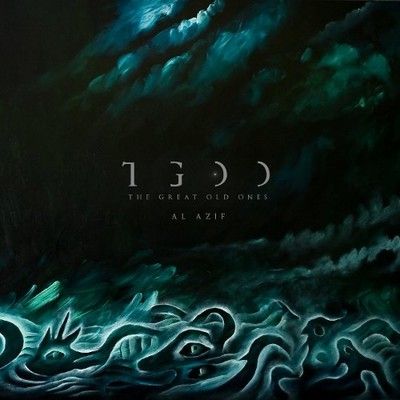
The Great Old Ones- Al Azif(2012)

The Great Old Ones- Al Azif

How strange it is that one of the most influential creative forces that has helped shape Metal in all it's forms would  be a long dead horror writer from Providence, Rhode Island with one of history's truly great ironic monikers.  H.P. Lovecraft and his cosmic, esoteric Cthulhu Mythos is among the most referenced subject's in Extreme Metal's historically limited lyrical pantheon(also featuring a little cloaked man with horns and various naked, mutilated women), yet seems to carry a certain air of class about it.  Anybody can write a song about Satan or goats or gore, but in order to Lovecraft-up your lyrics, it means you had to actually read what is now considered classic literature(though Lovecraft was only mildly successful in his own lifetime).  Pretty classy, and the main draw behind The Great Old One's newest album, Al Azif.  Though French, The Great Old One's sound is distinctly American; specifically, the new breed of atmospheric, Shoegaze-and-Doom influenced Black Metal popularized by the likes of Weakling, Wolves in the Throne Room and Krallice.  Being French and all, you would hope that The Great Old One's would have some fresh new ideas to bring to a very trendy, very popular genre, other than the whole Lovecraft thing.

Well... no, not really.

Frankly, Al Azif comes and goes, leaving little in the way of extra-dimensional terror or cosmic infestations.  Hell, it barely lifts a tentacle as it plods along at typical Depressive Black Metal tempos and thick, admittedly inviting Black/gaze/Krallice riffs rule the day.  This is just very typical, very mild stuff The Great Old One's are showcasing as dynamic, progressive Atmospheric Black Metal.  Song's follow predictable progressions, usually alternative between a soft intro followed by lots of fast bits, with softer compositions popping in just on time to break the monotony before the fast stuff starts again... usually for excessively long play-times.  Memory fails when trying to find a single highlight in the haze, and the haze itself is pretty bland: more a smokey, smelly mess then a true thickening of the air that causes the lungs to struggle against inhaling it.  The only aspect of the album that stands out in anyway is the wonderful production: I'm a big fan of the thick, static heavy approach to Black Metal, and it does work here, if only to provide the lone bright light in a sea of dimness.  Al Azif struggles to give the listener much of anything: riffs, atmosphere, or even delivering on the promise of it's subject matter.

This is the thing I understand the least about Al Azif: why even bother going with a Lovecraftian theme if all you are going to write are typical, generic Blackgaze songs that Leucosis and Ash Borer did better last year?  Truth is, I know little about Lovecraft as a writer, but it seems to me the man had a really cool vision.  The whole idea of cosmic horror and esoteric, ethereal old spirits slowly devouring our souls and minds sounds pretty fucking twisted, especially considering the age in which Lovecraft wrote these stories.  If your concept band is going to make a concept album about this kind of shit, it better be as demented and perverse as the concept itself.  Compare this tripe to Brown Jenkins, another Lovecraftian themed Atmospheric Black Metal band(now essentially called The Ash Eaters), and it's like comparing an infant wearing a Cthulhu mask to the real thing's massive, tentacle cloaked member.  We could compare this also to the works of Thergothon or Catacombs, but it's pretty much the same result.  Al Azif might as well be titled Al Franken or Al Capone, because in the end there will be no "visions of R'lyeh" to haunt your dreams after listening to this chore.

Al Azif is not a poorly played album.  It doesn't sound bad, in fact it sounds utterly fantastic.  And it really isn't even a poorly written one.  It follows all the established guidelines of the genre to their well-tread ends, on time and with gusto.  It's that none of it feels unique, memorable or intense in anyway: everything is a blur, and the twisted chants of the star cult are completely obscured by the dime-a-dozen Blackgaze eclipse wonderfully suggested on the albums (brilliant looking) cover art.  The rites of Cthulhu this is most certainly not.

Rating: 3.5/10

Thursday, August 30, 2012

Review Round-Up: Raw as Fvck in the VSA

This whole review thing can be a real pain in the ass.  For one, you always need to be on top of the newest releases, yet because of this annoying little thing that keeps forcing me to do things like go to work and bathe, I never have any time to review them. I think it's called "real life" or something, and I'm not too fond of it.  Unfortunately, homelessness limits my Wi-Fi options, otherwise I would sleep in the alley behind the grocery store and listen to obscure shitty Black Metal albums all day, stopping only occasionally to fight off the packs of feral cats.  We all can dream...


The Rain in Endless Fall- Weald of Introspection(2011-2012)

Hailing from Portland, Oregon, The Rain in Endless Fall is the second project of Lord Vast and Grond Nefarious, also of Wylve and the masterful Blut Der Nacht.  With a more Depressive Black Metal slant, The Rain in Endless Fall are not as powerful and primitive as Blut Der Nacht, but it's still a solid project.  Grimm yet oddly melodic, Weald of Introspection does offer some uniqueness in its structure: the opening track "Ashes Left of a Flame That Once Burned Within" is the true song, the final three tracks making up a solid grimm outro of acoustic guitar passages and the hypnotic whispers of rainfall.  It's still pretty standard stuff, but well played and perfectly produced to satisfy your cravings for cold, thin, frozen Black Metal.

Rating: 7/10


Wylve- Wylve(2012)

And here we have Wylve's debut s/t demo, which isn't all the different from the stuff done by The Rain in Endless Fall: melodic, atmospheric and raw.  There is a bit more speed here, but it's all about the repetition and cold, frozen atmosphere.  It's also the cleanest material this duo have produced, but whether that's a good or a bad thing depends on personal preference.  Truth is, neither of this projects hold a candle to Blut Der Nacht, but then again few bands in modern Raw Black Metal do.

Rating: 6.5/10


Grinning Death's Head- Golden Dawn(2012)

Grinning Death's Head have been teetering the line between primitive, skull fucking Black Metal and sloppy, unlistenable Crust Punk better then just about anyone else since their 2008 debut demo, and Golden Dawn isn't much of a departure from the bands previous material.  Brain-injury may result from the raw, incomprehensible production, but sifting through the static waves of pain reveals a deep under-current of crusty, filthy riffs and ruinous, tortured screams.  Songs are simple and catchy, breaking bones and rending flesh with an effective mid-paced tempo, but I imagine the production will scare away more then a few listeners.

Rating: 7.5/10


Torture Chain- Time is But a Doorway to the Incinerator(2012)

If one band in modern Black Metal can make a claim to being the next Darkthrone, my vote would go to Torture Chain hands down.  Easily one of the finest projects in Black Metal today, Torture Chain are a defining modern act, and Time is But a Doorway to the Incinerator is 23 minutes of frozen bliss.  Equal parts unchained aggression and spine-tingling melody, Time devastates the very air, turning into a toxic, flesh-melting mist.  It's all heavily inspired by Norwegian masters as the aforementioned Darkthrone, Mayhem and even a bit of Emperor, but it also brings a bit of that American spirit to the song-writing with it's  crusty, powerful guitar sound and full-throated vocal attack.  Time is easily the bands best material since the nearly flawless Humbling Isolation Terror, and a must listen

Rating: 8.5/10

Tuesday, August 21, 2012

Nightbringer/Acherontas-The Ruins of Edom (2012)


Nightbringer/Acherontas-The Ruins of Edom

Considering that I have been voraciously devouring anything and everything American black metal luminaries Nightbringer have put out since the day Lucifer Trismegistus first viciously carved the sigils of Satan unto my unsuspecting mortal form, it is needless that amid a sea of terrific releases I was anticipating this year, this was high upon the list.  Nightbringer is, quite simply, one of the greatest American black metal bands currently still in operation, utilizing vile yet grandiose riffing that takes the usual chthonic atmosphere of black metal to a far more dangerous level.   Acherontas too, is no mere acolyte in the scene, crafting darkly melodic overtures that draw heavily upon the riffs of such Swedish legends as Dissection and Necrophobic, while adding a more dissonant aspect that puts them firmly in the “Orthodox” black metal camp. 

The resulting split could in some sense be considered a display of consistency on both bands’ part, yet I could not help but feel that for me personally, it represented the hitting of a creative rut that most great bands eventually stumble upon in their careers.  The split opens on the Nightbringer side with a cavernous, ritualistic dark ambient piece that serves as an effective, haunting introduction to Mare, the first true metallic track on the release.  In the tried and true spirit of a Nightbringer song, tremolo-picked melodies whirl (dare I say waltz?) like possessed dervishes over a blood-soaked mountaintop, equal parts nocturnal and blistering, while blasting drums simultaneously hammer away at the foundations of your sanity. 

The race towards perdition eventually slows down and culminates in a paean of dark triumph, providing a satisfying conclusion to this blasphemous assault.  While Mare was undoubtedly the most enjoyable piece on the split for me, in the end it still felt like an inferior rehashing of the scorching style they had perfected on Apocalypse Sun, albeit with every element that made the latter release great toned-down and condensed into more accessible form.  The song’s relative predictability and straightforward song structure ended up only making me crave the more mystical, jarring realms of their past releases, despite it being in all regards a solid track.

That being said, the second Nightbringer track would prove far more lackluster in form.  The Grave-Earth’s Son drags itself into nonexistence with its lack of song dynamics and plodding pace.  While similar, slower numbers had worked well for Nightbringer in the past through the sheer majesty of their melodic fervor, Grave-Earth’s Son simply just sits there and stews in menace, but ultimately doesn’t deliver the conclusive bite that would have made the song stand out for me.  While certainly not lacking in the trademark Nightbringer atmosphere, the song proved to be a narrative to nowhere, not aggressive or purposeful enough for its own good. 

After another long dark ambient interlude that, while serving its purpose effectively, felt anticlimactic as the epilogue of a below-average Nightbringer performance, it’s finally Acherontas’s turn to spread their miasma over hallowed ground.  And they do so, in great form.  Layil is a monstrous track that takes the mystical diabolism of Vamachara and adds a degree of dissonant urgency not unlike what we have heard in French luminaries Deathspell Omega’s work.  The riffs are relentless in their shifting nature and pummel the listener like molten meteorites.  Yet they never become too convoluted for their own good, and ultimately serve as mere conduits for a powerful atmosphere of unearthly blackness.  The track eventually pulls itself into a subtle yet beautiful melodic riff that draws this symphony of darkness to a close.  In contrast to Naas Alcameth’s monstrous howls however, Acherontas’s vocalist seemed rather meek, especially in the context of Layil’s more bombastic nature.  This minor irritant only slightly detracted from my overall appreciation of the track. 

Alas, the moment of triumph is all too ephemeral, as the Acherontas side draws to a close with yet another ambient outro that seems all too anticlimactic.  In the end, The Ruins of Edom falls prey to its own lack of ambition, yet is framed in a grandiose manner that belies the rather brief moments of triumph within its enclosure.  While the release does contains its flashes of brilliance, I cannot help but feel that so much more could have been accomplished through this unholy alliance.

7/10 

Tuesday, August 7, 2012

Review Round-Up : Dissonant Fields

It's been a while since I've done a review round-up, but I found myself dealing with four separate albums that shared way too many similarities of influence: Deathspell Omega, Blut Aus Nord and Ulcerate.  So rather then be all redundant and shit(you guys all hate that), a few mini-reviews seemed in order.


Azoic- Gateways(2012)

It doesn't get more fresh then this: a brand new duo from Iceland(though both members have plenty of experience), Azoic have released a damn fine debut with Gateways.  It's not exceptionally original: if you have heard anything from Deathspell Omega, Ulcerate or Blut Aus Nord(or just about any current "Orthodox" Black Metal band or modern "Atmospheric" Death Metal band), you have heard much of what Gateways has to offer.  The strength of the album comes with the details: the production is thick and warm, featuring brilliantly ethereal vocals and a rich, full guitar sound.  Gateways consistently mixes up the intensity and tempo, and it's fairly effortless in it's atmosphere while remaining highly technical and aggressive.  It may be little more then the sum of it's influences, but Gateways works and works well.

Rating: 8/10


Beyond Terror, Beyond Grace- Nadir(2012)

I just don't get this album.

Beyond Terror, Beyond Grace were once one of the better young Techgrind acts around, and seemed well on their way toward joining the elite of that genre.  Then comes this massive shift in sound, and a massive down-shift in quality: Nadir is not a bad album per-se, so much as a just terribly boring one.  Nadir feels like a practice recording, a band toying with a massive change is style and getting the feel for the genre.  These moments have their place, but not on a major release.  Nadir has a few individual riffs and moments where things pick up, but the tempo remains consistent most of the album, the production mix is atrocious and the vocals do not fit the new style in anyway.  Nadir is an ugly, incomplete-feeling album that struggles to find a voice in a crowded, trendy genre... a rehearsal recording dressed up as a full-length album.

Rating: 4/10


Dodecahedron- Dodecahedron(2012)

No album has been more polarizing for me then Dodecahedron.  The part of me that craves adventure, creativity, originality and personality wants to love Dodecahedron for the experimental, genre-bending tornado that it is.  While featuring a dozen or so obvious influences, particularly Deathspell Omega, Dodecahedron never becomes reliant on these influences to justify itself.  From the first note to the last, the album pushes as many boundaries as it can, and quickly as it can.  Mixing elements of Death Metal, Black Metal, Prog Rock and Post-Rock, Dodecahedron is the kind of album that would normally get me all hot and bothered.

Unfortunately, Dodecahedron is equally as limp-wristed as it is progressive.  A strange complaint perhaps: it seems likely that this Netherlands five-piece weren't really trying to crack open too many skulls or slaughter too many innocents with this album.  Yet this particular reviewer still laments the total loss of aggression and intensity in the search for genre-decimating technicality and progressiveness, and it makes Dodecahedron a major missed opportunity for me. It also doesn't help that the vocals are... well, bad.  Anaal Nathrakh bad.

Rating: 6.5/10


Esoterica- Idololatriae(2012)

Like Azoic, Esoterica are another oven-fresh two piece(US based), and their new EP Idololatriae is fairly solid.  It's a very similar album to Gateways, though it also features the strongest modern Blut Aus Nord vibe of all the albums featured here.  It's another slab of thick, warm and technical Atmospheric Black/Death that isn't strikingly original, but works for what it is.  "Dilated" in particular stands out as a dissonant wall of noise, though this track also stands head and shoulders over the rest of the album.  Solid and acceptable.

Rating: 7/10

BONUS REVIEW:


Deathspell Omega- Drought(2012)

Since their shadow looms large over this entire post, it seems appropriate that we touch on the brand new EP from the masters themselves.  They need no real introduction: Deathspell Omega are without a doubt one of the defining Extreme Music acts of this, or any, generation.  Whether every note fills you with intense love or sickening hate, Deathspell Omega have always held great power, regardless of how many times they made drastic, explosive changes to their sound.

Until now anyway.  Drought is an appropriate album title: it's dry all right, in both new ideas and evil.  Imagine Paracletus, merely devoid of any real Black Metal sensibilities, and you have Drought.  It has far more in common with the progressive, Proggy Death Metal of acts like In Mourning or Fallujah then anything else, complete with a butchered production sound.  At times, through sheer force of musical prowess, Drought begins to show some life: regardless of genre, the members of Deathspell Omega are some of the finest musicians in the world and Drought proves it unequivocally.  Yet it was always the song-writing that made Deathspell Omega truly great: a black fog of un-life, filling the air with electricity and suffering beyond compare.  Drought evokes none of these images, drenched in Prog and unimpressive melody, seemingly trying to get by on technical prowess and nothing else.

It's not a devastating blow to the legacy of Deathspell Omega by any means: it is more slight and forgettable then truly disastrous.  Deathspell Omega have always sought new ground for each individual album to stand, and truthfully Drought is yet again a new direction for the band musically.  It was an album of calculated risks, and when a band takes risks, no matter their talent or history, they are capable of a mis-step.  Drought is a failure, but an admirable one.

Rating: 5/10

Tuesday, July 31, 2012

Hellvetron- Death Scroll of Seven Hells and it's Infernal Majesties(2012)

Hellvetron- Death Scroll of Seven Hells and it's Infernal Majesties

If there is one big positive we can take from the revival of Old School Death Metal over the last seven years(give or take), it would have to be the birth of "Occult Death Metal."  Influenced heavily by New York legends Incantation and Immolation, as well as a diverse group of Death and Black Metal bands from the early and mid 90's,  "Occult Death Metal" remains somewhat of an enigma: it's not really a genre, and the bands who often fall under the label are very diverse stylistically.  The ties that bind these modern acts together are esoteric and misty, but one word always appears in every bio, blurb and review for these acts: atmosphere.  Specifically, a primary focus on atmosphere and emotional intensity over "riff-salads" and guitar solos.  The music these artists create is often lo-fi and organic, in an effort to invoke the old, rotten spirits of the Earth.  And that's exactly what Hellvetron are attempting to do on Death Scrolls of Seven Hells and it's Infernal Majesties: summon the unknown into the light, so that it may devour willing and unwilling souls alike.  Hailing from Texas, Hellvetron fit about as perfectly into the "Occult Death Metal" movement as any artist I have heard.  So much so in fact, that Death Scrolls might just be the birth of a genre: the first real Occult Death Metal album, sans quotation marks.

That's not to say that Death Scrolls is massively different then anything you might have heard before.  The specters of  Incantation, Imprecation and Beherit loom over the entire recording, and modern acts such as Grave Upheaval, Antediluvian, Sonne Adam and Muknal have also touched on many of the dark, twisted themes that Death Scrolls does.  Yet this album does have a claim on being the first true Occult Death Metal album, because the focus is 100% on atmosphere and texture: pulling individual riffs and sections from this light-devouring void of madness defeats the purpose of the compositions, which are built from the ground up to evoke specific emotions of dread and demonic possession.  After a dozen spins of Death Scrolls, I never once found myself even lightly bobbing my head or commenting under my breath about "nice riffs."  That's not to say that the album doesn't have them, or that it's rhythmically spastic, only that everything about the album is nefariously designed to be atmospheric and textured.  The riffs and drums are buried under a mile of reverb, while the tempos remain slow and hypnotically focused.  The compositions are also dense and busy, featuring loud, powerful vocals and extensive use of ambient keyboards and noises, while the bass is overwhelming with it's low-end intensity.  The ambient sounds in particular are my favorite aspect of the album, and with more and more bands making use of them, they still stand out here because they are used appropriately and only for maximum effect.  Death Scrolls is an album meant to be experienced more then merely listened to, which is partly why I don't find it quite as awe-inspiring as many of the albums released by Hellvetron's peers.

Hellvetron have taken the ratio of "pure insanity" and "listenable" and thrown it completely in the direction of screaming nightmares.  Which is not a bad thing, it merely makes Death Scrolls an album with a time and a place to be enjoyed.  If you plan on summoning some ancient atrocity against God in your dank, smelly bathroom, I could not think of a more appropriate album to have ominously proliferating shadows in the swell of incantations and smoke, but beyond these moments(we've all been there), Death Scrolls is just not every day listening.  It's an album that demands being started and finished all in one sitting to really make any impact, so just casually picking out a single track to play for a friend or to throw on a play list is utterly pointless.

Death Scrolls is a fine album regardless of it's limited use: it fits all my personal desires for Death Metal, as it is nihilistic, atmospheric, fresh and strongly rooted in it's thematic purpose.  And no doubt fans of the "Occult Death Metal" movement will greatly enjoy this album.  The atmosphere is effortless, the intensity is sky-high and the evil simply overwhelming.  Hellvetron achieves every single goal it set for itself on Death Scrolls, and my future forays into the unknown in the search for ancient secrets will have a new soundtrack.

Rating: 8.5/10

Tuesday, July 24, 2012

GGUW- Gegen Gravitation und Willensfreiheit(2011)

GGUW- Gegen Gravitation und Willensfreiheit

The opening Gegen Gravitation und Willensfreiheit is little more then the distorted sounds of various animals of unknown origin, clamoring and shrieking in pain and rage, while a thundering drum smashes against the backdrop in pure frustration.  The monster of the sub-conscious perhaps, throwing itself against the weakened walls of one's sanity, breaking down the barriers of humanity in a desperate search for freedom and flesh.  Gegen Gravitation und Willensfreiheit is a bestial experience, one of transformation and emancipation from a cold, unnatural world that we live in today.  It's a Black Metal album unlike any I have heard: it's rawness and repetition are instantly familiar, but it's atmosphere is completely alien and unique.  No album has ever made me feel like Gegen Gravitation und Willensfreiheit has, and the album leaves not only a lasting emotional impression, but a physical one as well.  Gegen Gravitation und Willensfreiheit is full contact art, unsympathetic yet oddly warm and inviting, drawing you in with it's comforting yet imposing guitar sound and emotional, devastatingly sad vocals.

Once the cage to the beast within is opened, Gegen Gravitation und Willensfreiheit envelops you in it's controlled insanity.  Then opening untitled track(all the tracks are untitled) features no more then three actual riffs, repeated continuously with consistent speed and mounting intensity, while an inhuman shriek likely saying nothing at all calls out from the abyss of distortion and blast-beats.  It's a deceptively simple composition, more endurance then skill, but it's incredibly effective and powerful.  The vocals devolve into nothing more then mad wails, choking noises and bellows, and by now the transfixing and hypnotic riffs have put you under their spell.  You feel every ounce of the sadness and anger; you become the beast within.  

The following tracks are somewhat more traditional, yet remain sickening in their darkness and bewitching in their construction.  There is an obvious influence of Depressive Black Metal, yet GGUW do not sound like any Black Metal artist I can really think of, other then perhaps Luciation(though both projects evoke entirely different images and emotions).  All the elements are familiar, but presented in such a way as to be unparalleled in the genre.

If any complaint against Gegen Gravitation und Willensfreiheit can be levied, it's that the album feels somewhat incomplete.  At only three tracks, it features an obvious intro but ends abruptly and without much fanfare.  So does life it seems; it's likely the album feels unfinished because of the recent passing of guitar player Wolfrano Ketzer, who committed suicide in May   Hearing the bleakness of Gegen Gravitation und Willensfreiheit makes it hard not to wonder if the personal demons facing Mr. Ketzer had some impact on the sound and emotions of the album.  This is all speculation of course: maybe this was how the album was intended to feel and I have no inside information on what exactly happened or why.  But Gegen Gravitation und Wilensfreiheit feels like an album written and performed by men who understand suffering, and those emotions come through clearly and powerfully.  In a small sliver of positive news, GGUW will try and forge on without him, a testament to both the internal strength of their members and of a love for making music about anything but love.

I can only hope for more.  Gegen Gravitation und Wilensfreiheit may be short, but it's an album which can be listened to over and over again despite the despondency of it's atmosphere and themes.  It's a small jewel, a tiny masterpiece whose impact far exceeds it's stature.  It calls to the inner monster within all of us, and it cannot help but answer it.

Rating: 9.5/10

Sunday, July 1, 2012

Wreck and Reference- No Youth(2012)

Wreck and Reference- No Youth

Deconstructive, ethereal, dripping with a noxious mix of disgust and listlessness, No Youth is this years sound-track of total defeat.  The California twosome of Wreck and Reference have been rolling on a pretty big hype machine since their demo Black Cassette, but No Youth is a different monster entirely.  It heralds the arrival of one of Extreme Music's new titans while exemplifying the limitless potential of a project devoid of barriers, genres and fear.  No Youth is a Universe of sound that expands beyond the horizon into reaches of the void that have rarely, if ever, been tread.  I don't want to use too much hyperbole: No Youth is a triumph of an album and easily one of the best records released this year and this decade, but in and of itself it might not reach the truly hallowed lands of immortality.  What makes No Youth so completely fascinating is the aforementioned formlessness of the album and the fearlessness of the song-writing.  No idea was too big or intimidating for the band, yet the album remains focused, controlled and melancholic. No Youth is the ultimate piece of cathartic expression and flawless craftsmanship.

It's utterly amazing to think that No Youth is an entirely electronic album, considering the massive drone and deluge of static and feedback that comes whirling and whipping from the speakers.  If we are moving into a future of purely electronic music, then No Youth may be a defining release, though the bombastic, explosive drumming on the record keeps it grounded in the real and tangible.  The percussion here is massive and powerful, thundering across the tracks and keeping the often dream-like compositions drowned in hopeless reality.  "Nausea," easily my favorite track on the record, is a perfect example: a slow, Drone intro gives way to an almost oil-and-water mix of slow, ethereal Swans-esque madness driven by thundering Darkthrone-style blast beats.  I can honestly say I have never heard such a dynamic combination of sounds before, and No Youth is over-flowing with these odd, exhilarating moments.

If there is any obvious influence on No Youth and Wreck and Reference in general, it has to be the Swans.  "If" being the key word, but there are a handful of similarities: the utter hopelessness of the vocals and lyrics and the mostly short, concise tracks that still drip atmosphere and anger were both trademarks of Michael Gira's signature project, and both elements are featured prominently on No Youth.  But so is the deluge of static-y, dense Drone/Doom, and at times Wreck and Reference effectively mix both, such as on "Cannot," which dances between somber, dark spoken word poetry to soul-siophoning Doom.  Once again, everything meshes so flawlessly that this seemingly awkward approach to songwriting feels completely natural and focused.  The atmosphere of self-hatred and melancholy remains wholly intact, no matter how ferocious of defeated the music gets.

No Youth is a damn difficult album to talk about: it's easy to heap praise on it, yet tough to pin down  Genre classifications are very hard to come by listening to No Youth, and trying to prepare a listener for the experience is near impossible.  No Youth is an album that just kind of has to be experienced, and the outcome of the experience will be colored by the one who lives it.  No doubt some will find all the sopping wet depression and self-inflicted damage as overkill, or even a bit silly.  Others will be touched deeply by it, and relate with the hopelessness and cathartic intensity of the album.  I can say unequivocally that No Youth is not for everyone.  It's not accessible, rarely melodic and never fun.

It all comes down to craftsmanship and creativity.  Some have one, some have the other and a rare few albums have both.  No Youth clearly has both.  The natural barrier of entry in how dark and defeated the moans and tones No Youth features leads to tough sailing even for the heartened and curious.  No doubt some will be unable to make it into the deeper layers of No Youth.  I can't say that I blame them.  But for the most masochistic, driven listeners among us, No Youth is a can't miss album.  It's an album that doesn't even feel like it ever had any boundaries in the first place, guided only by an unseen hand which dutifully orchestrates the madness and sorrow into a handful of notes and lyrics that evoke a sickened spirit of humanity.

Rating: 10/10

Tuesday, June 19, 2012

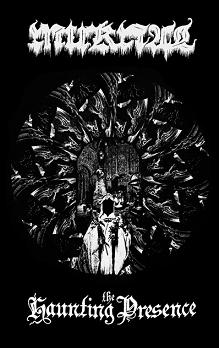
Muknal/The Haunting Presence- Split(2012)

Muknal/The Haunting Presence- Split

The Black Twilight Circle are no doubt divisive, and I am not really going to get into all that with this review.  Yes, the whole thing is on the pretentious side, but then again it's impossible to ignore the sheer quality of the bands and releases from this shadowy collective of musicians.  The Black Twilight Circle, along with related record labels Rhinocervs and Crepusculo Negro, has become the center of the American Black Metal scene not through style and image, but by releasing some of the best Black Metal on Earth.  Muknal and The Haunting Presence represent new territory for the BTC however. It may seem that Muknal's cavernous, suffocating miasma of New York-styled Death Metal and the reverb choked, balls out aggression of The Haunting Presence don't really fit in with the rest of the BTC and their atmospheric, genre challenging terrorists.  But in fact they do: both bands create gloomy, rotten atmospheres of dust and insects, giving one the sensation of being forever sealed in an ancient tomb.  This focused, effortless atmosphere is a trademark of the BTC, and the true strength of this transfixing little split from two of my favorite acts in modern Metal.

The first two tracks belong to Muknal: this was the side of the split I was most excited for, as Muknal have already released the best Death Metal album of this year a few months ago with their s/t demo.  That demo has remained one of my favorite releases this year, and the chance to hear more material from the band was exciting.  I am not disappointed: "Hecatombs" and "A Winged Emblem of Evil" are the definition of subterranean evil and cosmic devastation.  Drawing heavily from New York gods Incantation and Immolation as well as the fiendish Imprecation and the demented Infester, Muknal are all about spawning suffocating atmosphere's of spiritual horror.  Muknal are not merely happy being another "Incantation-clone" and like Dead Congregation and Grave Upheaval, seek something greater for themselves and their music: dissonance and effective use of sampled sounds and gloomy electronic noises gives the two tracks a very ritualistic intensity that most imitators couldn't evoke in a dozen releases worth of material.  It's all so expertly crafted and effortless, and even more impressive when you consider that Muknal appear to be developing a more technical sound.  "A Winged Emblem of Evil" in particular has a strong, atmospheric technicality to it with the complex guitar play and fantastic drum work.  Both songs are certainly more complex then the material found on the s/t demo, and may signal a departure from the bands primitive roots.

The last two tracks are from The Haunting Presence, one of the first bands to really stand out from the BTC collective genre-wise.  With a sound clearly influenced by Blasphemy, Demoncy and Archgoat, The Haunting Presence seems like the exact type of project that would be leading an anti-BTC charge.  "Malignant Curse From Beyond" and "Hideous Faces of Unknown" are two reverb drenched abortions, viciously thrashing about in a muck of biowaste and sulfur.  Alternating between destructive speed and oceanic trenches of darkness and doom, The Haunting Presence show a masterful control of the bestial barrage without sounding like a cheap imitation.  This is also easily the best produced material the band have released, sounding both balanced and well mixed yet utterly caustic and raw.  The low end rumbles and roars and the riffs spew grime and gore while the demonic grunts of Ghastly Apparition echo above the Hellish aftermath. And once again, the bands super-primitive veneer is challenged a bit on "Malignant Curse From Beyond" which adds a small layer of complexity with some dynamic rhythms and complex drums.  I would not call The Haunting Presence anything less then primitive and dessicated however, so don't expect too much complexity.

As much as I love this split and the bands involved, I have no doubt that both projects will struggle for the notoriety they clearly deserve.  On one side you have hardcore BTC haters who, even if they like the music, will refuse to support any project involved.  On the other side we have the hardcore BTC fanboys who may look at Muknal and The Haunting Presence as the ugly ducklings on the collective, playing unrefined genre's that have long grown stale.  I sincerely hope it doesn't come to this(Fact: if you are a Death Metal fan and not into Muknal, you are missing out), but it's hard not to feel like this is a possibility.  For those of you who could care less about collectives or genre elitism, then this split will gladly devour your soul and you will be glad to offer it.

Rating: 9/10

Sunday, June 17, 2012

Rahu- The Quest for the Vajra of Shadows(2012)

Rahu- The Quest for the Vajra of Shadows

Drawn to it from positive word of mouth and the brilliant cover art, The Quest for the Vajra of Shadows was the ultimate shot in the dark for me.  I've never heard of this Finnish two-piece, though I am familiar with Atvar and his project Circle of Ouroborus, nor am I an any way familiar with Hindu mythology.  But this made the thrill of discovering fresh brilliance all the more satisfying, as The Quest for the Vajra of Shadows is a dynamic, well constructed and immersive Black Metal.  Rahu don't completely re-invent the wheel, so much as deconstruct it, moving the various pieces to and fro to fit their compositional desires.  It's such an expertly done album, which feels both fully realized and warmly familiar without being derivative.  Rahu have landed in  the sweet spot of creativity and craftsmanship, and do so with such confidence and skill that it's impossible not to be impressed.

Featuring a raw, space-y production, The Quest for the Vajra of Shadows sounds great and makes a strong first impression that eases you into the deeper, darker aspects of the album.  The Finnish influences are pretty strong with an evident Horna and Sargeist vibe, threads of chilling melody strewn amongst the fleshly and raw Black Metal riffs, but the dependence of hypnotic song structures and pure crushing blackness brings to mind Darkspace and even Burzum at his most raw and sleepy.  It's a powerful combination of traditional demonic practices with the ethereal darkness of modern atmospheric Black Metal, complete with all the nihilism and somberness left in tact.  The Quest for the Vajra of Shadows is firmly an Atmospheric Black Metal record, but it touches on a lot of different styles and atmospheres and feels both real and focused.  It's an album that comes about when a couple of talented, learned and visionary musicians get together and create: the perfect storm of creativity and credibility.  I wouldn't go so far as to describe The Quest for the Vajra of Shadows as ground-breaking, but it's not far off.  The influences are there but they never overwhelm the bands vision or identity and the album feels unique throughout.  Rahu sure didn't invent the disparate elements on this album, but they have without a doubt come up with a new way of operating them.

There are no real complaints for my part: The Quest for the Vajra of Shadows is a complete album and a full-contact listening experience.  Though perhaps not quite and overwhelming as Darkspace, who seek to swallow you in the massive gravitational force of their riffs, Rahu present many of the same ideas in a more diverse and vibrant way.  Rahu are masterful in their use of melody, always a tricky thing for most Black Metal, composing both eerie whispers and soaring, epic leads(or in the case of the opener "Ordeal of X," both).  The twosome also demonstrate complete control of atmospheric song-writing, as repetition is used to create hypnotic atmospheres, but never abused to the point of boredom.  The Quest for the Vajra of Shadows makes use of a lot of tricky, difficult elements: melody, repetition, rawness, extreme song-length.  All of these things utterly destroy lesser acts and albums, yet all feel absolutely essential to the greatness of this album.  It's utterly amazing when you think about it: Rahu took all of these elements that consistently ruin other bands, and then crafted an entire album around them with masterful precision.  It's as if the band were trying to win a bet, and if there was a wager on whether a band could pull all of these concepts off on a single album then somebody needs to pay up.

I honestly cannot recommend The Quest for the Vajra of Shadows enough.  Black Metal is a genre that can be so diverse that it's hard to find those albums that every Black Metal fan can enjoy.  Some want keyboards, some want epic, some want grime and ghouls and some want to be eviscerated.  The Quest for the Vajra of Shadows provides a little bit for all while being as focused and professional as one could ask for.  I don't know whether this album will be remembered for years to come as some classic or if like many great albums it will disappear into the bowls of obscurity, but for this moment, The Quest for the Vajra of Shadows is an epic undertaking worth the struggle.

Rating: 9.5/10