Showing posts with label Death Metal. Show all posts

Thursday, May 29, 2014

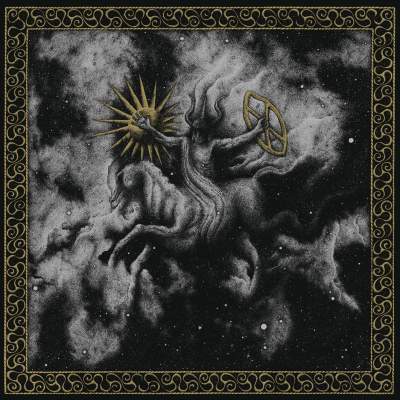
Artificial Brain- Labyrinth Constellation(2014)

Artificial Brain- Labyrinth Constellation

Labyrinth Constellation is the kind of album which is just fucking miserable to write a review about.

Artificial Brain's debut full length is so instantly likeable, so warm and dissonant and fuzzy that is just immediately slides into a comfortable spot in your listening rotation, playing though it's "just right" playing length and throwing dozens of killer riffs and dynamic composition changes at you that it gets boring.  It is simply a perfectly crafted album from top to bottom... and that's what also makes it at times feel so unessential.

This isn't really a fault in the traditional sense.  This is an album not only of  technical skill but also chock full of ideas and just a hint of uniqueness to it.  Labyrinth Constellation fits rather snugly into the realm of hyper dissonant, hyper technical Death Metal with ever so subtle Black Metal and Industrial Metal elements, but not only athletically and aesthetically dominates much of it's lesser competition in the genre(Read: Vermis), but also offers enough personality to feel like something new.  Between all the Gorguts-cum-Deathspell Omega of Labyrinth Constellation lives the brutally muscular soul of Breeding the Spawn and Effigy of the Forgotten.  Imagine an art house Suffocation, thrashing through dozens of complex riffs and seeking face melting zenith while throwing lots of dissonant, melodic undertones at you from all sides.  It's works too damn well, and that's largely the problem.

There is very much a cold, calculated and mechanical nature to the album, despite it's thick, inviting production and heavy reliance on atmosphere.  Even at it's most unique, melodic and fuzzy, Labyrinth Constellation feels like a mapped out emotional journey that tries to trick you into thinking it's not on rails by moving fast and with lots of (un)wreckless abandon.  Certain sections seem to repeat themselves, and the tempos move quickly but are interchangeable and refurbished across multiple tracks.  Often times, I try to predict how a song will go and then see if the album can surprise me.  Labyrinth Constellation is the least surprising album of 2014 so far, even compared to much more traditional and much inferior albums.

It seems like a small thing to harp on, but it's a big deal in the margins of Death Metal history.  Labyrinth Constellation is an album seemingly custom made for me to adore with levels of fanboy faggotry; and album for me to lay on my custom hyperbole all over and annoy most metalheads who vastly prefer Jumpin' Jesus to anything made after 1994.  And I really very much enjoy the album.  I love the gargantuan brutality, the skin flaying dissonance and effortless atmosphere.  And any album featuring Will Smith of the truly legendary Biolich on vocals is a keeper for me.  But Labyrinth Constellation also feels...unworthy.  Something about it fails to achieve the heart of my stars, and although it soars high, Labyrinth Constellation in the very end finds itself burning up and crashing toward an unforgiving Earth.

Rating: 8/10

Thursday, September 26, 2013

Bölzer- Aura(2013)

Bölzer- Aura

Wow.

If you find yourself at a loss for words after spinning Aura, the devastating and fresh EP from Switzerland's resident warlocks Bölzer, you are certainly not alone.  Aura is an album with a sound and sense of style no other has been able to obtain, and stands as one of Death Metal's most unique and mystifying records.  It's heaviness is matched only by the controlled but adventurous creativity, and both are completely dwarfed by the sheer sonic mass of it's riffs; all a galactic force of sheer density and dynamic melody  The second "Entranced by the Wolfshook" begins to soar from your speakers like a comet streaking across a blood red and black sky, leaving in it's wake ominous omens of apocalypse, you'll fully understand what you are listening to hasn't been attempted before.  It's exciting, and even more so worth experiencing first hand.

Bölzer has built the very essence of Aura around brilliant guitar work and flawless song-writing.  I've already described the riffs as monolithic, and to be honest there are a dozen other adjectives I could throw at them: titanic, haunting, oddly beautiful, captivating.  It goes without saying that Aura is the great guitar driven album of the year, and it a swirling mass of Blackened Death Metal which has no real analog in the rest of the scene.  Aura is at it's heart a very old-school sounding album.  Possessing little in the way of blast beats and no ambient keyboard or electronic noises, Aura feels like an album from the early years of Death Metal with it's supreme emphasis on riffs, riffs, and more riffs.  Yet Aura also feels alien; it's creativity borders on dangerous and challenging to the established song-writing in the scene.  Imagine Incantation and Asphyx had launched Onward to Golgotha and Last One on Earth into space, where it was discovered by an alien intelligence possessing the technology to use sound as a way to rip planets into pieces for some demented astrological property management.  Imagine that they wrote their own Death Metal album after absorbing these albums for a decade and added their own utterly inhuman flavor to it, then sent the sheet music to Switzerland in a pod which I imagine both HzR and KzR discovered. Aura seems like their near perfect attempt to translate this inconceivable creation with pathetic human instruments.

I like the space theme here, because Aura has the sort of expansive and riff driven sound which brings to mind early Post-Sludge masters Neurosis and Isis and the thundering and classic domination of Celtic Frost.  There are so many potential influences here, and they are all melted down and folded together to form a steel that cannot be broken; it will slice through your flesh with the ease of the metaphorical knife into the metaphorical flesh-butter.  This is all aided by the perfect tendons which hold the musculature of the album together: the drumming is effective and unobtrusive, and it bears mentioning again how nice it is not being assaulted by endless blast-beats.  The production is expansive, spacey and raw, yet even and incredibly full throated; Aura sounds fucking great, especially on vinyl(this is the kind of record made with wax in mind.)  And the vocals are second only to the riffs in pure power and effectiveness; KzR mixes a solid guttural growl with a strong mid-register scream, but he really shines with his moaning, tortured clean yells.  When KzR starts torturing his throat over this tsunami-sized riffs, it really drives home the Neurosis influence on Aura, though Blackend Death Metal remains the core of the albums sound.  This is an album which can bring together the trve and the false together for some fascinating pillow talk.

Whether listening to the gorgeous "Entranced by the Wolfshook," with its addicting and hook laden riffs full to bursting with dissonance and melody, or being crushed under the massive weight and repetition of "The Great Unifier," an unholy nightmare mash of Deathspell Omega, Incantation and Neurosis, you can feel the weight and power of each track work their way to your very core.  It leads to an incredible gushing of pure Metal-fucking-joy; Aura got me excited about fucking Metal like I was 13 years old again and just discovering heavier music for the first time.  I imagine Aura has that effect on many listeners, including putting fucking in front of Metal every time you say it, write it or think it.  Considering the cynacism of elder-status as a Metal fan, Aura accomplished something that not a whole lot of albums accomplish.  Perfection?  No.  Fucking Metal?  Verily.  Experience it.  I'll see you in the void.

Rating: 9.5/10

Friday, September 13, 2013

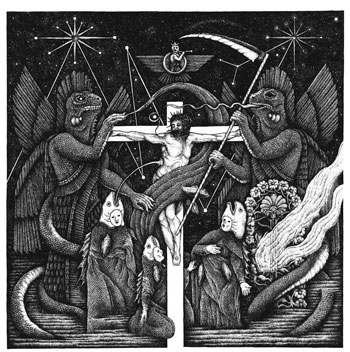
Ogdru Jahad- I

Ogdru Jahad- I

A savage and bestial grind from beginning to end, Ogdru Jahad's I is an album which fits comfortably into the mechanically putrid rot and filth of the scene, going through the ritualistic motions for a solid, uninspiring 30 minutes.  Complete with blasphemous artwork and Lovecraftian references, I is an album as predictable as it ugly, minus of course the brilliant cover art, though this is another staple of the scene that shouldn't be surprising, or the limited edition clear vinyl the album comes on(only 200 copies of course).

That's the thing about I that I find far more fascinating; its an album that feels like it was created in some sort of Ross Bay Cult-styled atomic generator which is pushing out filth encrusted, bullet-belted abominations in droves.  I itself couldn't be a more basic album; it sounds like Blasphemy, Conqueror and Archgoat, with hints of Thrash and First Wave Black Metal mixed in for extra credibility.  It features no unique traits to speak of, other than perhaps a  pair of songs which sound like they feature the same exact riff played only slightly differently in "Unholy Blessings" and "Empty Jehovah."  There are some killer tracks to be sure, with the groovy and barbaric "Weeping of Angels" and the utterly uncompromising and blistering "Necromantic Rites" standing out a solid highlights.  "Necromantic Rites" in particular features a hint of dissonance and mildly complex song structure, though it's fleeting and the grind will overwhelm all originality before the end.

What's more fascinating about I is how neatly in fits into the current Bestial Black/Death scene; another "super group" release featuring members of a dozen other bands including the mighty Lucitation and Sadomator.  It features glorious cover art courtesy of Alexander L Brown, whose done the artwork for dozens of other similar albums.  It's released on one of the premiere labels for such albums in Iron Bonehead Productions, and comes in both black and limited edition clear vinyl(it's since been released on CD as well).  You can check the boxes both sonically and culturally with I and neatly place in on the bookshelf in between your Gods of War re-press and your H.P. Lovecraft biography, never to be listened to after a few initial spins again and more than likely to end up on discogs.com for triple what was paid for it new 5 years from now.

In an of itself, Odgru Jahad's I is an inoffensive album which has some limited visceral intensity, but it's an album so comfortable and safe that it feels stale and bland right out of the gate.  From the very second the opening sample fades out and the opening riff slices through the air, the next 30 minutes is laid out directly in front of you, the bloody puzzle pieces stitched together smoothly.  No bumps, no pauses and no mercy.  And no fun.

Rating: 5.5/10

Sunday, June 2, 2013

Antediluvian- λόγος(2013)

 
Antediluvian- λόγος
 
Few bands receive as much universal praise and are endowed with as many accolades as the mighty Antediluvian, and deservedly so.  The bands last two releases, Through the Cervix of Hawaah and the brilliant split with Adversarial Initiated in Impiety as Mysteries, have set the standard for atmospheric, suffocating Occult Black/Death; terrifying and twisted in ways few artists have been able to match while developing a sound which sits on wholly unique ground.  Its been a truly horrendous transformation for an artist which started out as merely another Incantation-clone, and as λόγος(Logos) shows, it is a metamorphosis which is not yet complete.
 
Its a very subtle evolution on λόγος from the bands two previous albums; crushing, massive Black/Death riffs, twisted progressions, wild and chaotic drumming tempos and Nabucodnosor's squishy guttural vocals are still the centerpiece of Antediluvian's sound and λόγος is no exception from the bands two previous releases.  The devil is(probably literally) in the details here; λόγος is a more technical, chaotic, avant-garde release than I was really expecting from these Canadians.  While Through the Cervix and Initiated in Impiety had these inhuman, disjointed chaotic moments, they were tempered by plenty of rhythmically un-obtuse sections and lots of Doom-y repose.  Yet these moments have almost completely disappeared from λόγος, and instead the album is dominated by the gnarled and truculent compositions, creating a level of density few albums possess.
 
Its probably seems insane to think of anything from Antediluvian as "catchy," but going back to Through the Cervix in particular I was struck by just how many memorable many of the tracks were.  The crushing grooves of "Luminous Harvest" and the blistering yet simple assaults of "Turquoise Harvest" could really stick with you well after the fact, and despite the albums truly insane moments and thick atmosphere it was an album which felt grounded in good old fashion neck snapping Death Metal.  λόγος on the other hand is far more relentless and rhythmically chaotic: the drumming of Mars Sekhmet is far more turbulent and disjointed, and rarely is there ever a moment to hang your hat on, while the noisy elements of Antediluvian's sound have far exceeded previous releases.  Her performance on the kit is daunting to be sure, and those looking for neck surgery are the only ones who should even attempt to do anything even close to head bang.
 
The subtly of this is key here, and λόγος still feels and sounds very much like an Antediluvian release.  "The Ash and the Stars" twists and turns in the hurricane winds, and evokes the nightmares of ancient spirits with dissonant leads and swirling riffs.  "Nuclear Crucifixion(Turning the Spear Inward)" has some of the few remnants of catchiness and memorability left on this album, though it would have been the most chaotic track on Through the Cervix; it has some driving Incantation-style tremolo-picked assaults and some softer, less compositionally dense moments that offer a small reprieve from the onslaught.  "Towers of Silence" is truly an abomination, a bleak and devastating slice of Blackened Death Metal with perhaps the most ironic title ever, as the density and noise on this track is simply overwhelming.
 
If I can levy any major complaints at λόγος, they lie with the production: the drum sound is very hollow and while balanced with the mix seem loud, especially the snare, and the guitars sound much thinner and uglier than the warmness of Through the Cervix or Initiated in Impiety.  With how chaotic and dense the drumming is, the drum sound can become very obnoxious.  Its not a bad production mix per-se, but in comparison to previous releases this might be my least favorite since the bands early, nearly unlistenable demo material.
 
But from a song writing perspective, I find λόγος to be a slightly inferior album to Through the Cervix of Hawaah.  I find myself impressed with the bands continued foray to relentless chaos and utter hatred for their listeners, but part of me misses those truly memorable moments of the past.  I get far too much of a Portal vibe from λόγος, and while this album quite easily destroys anything that Portal have ever released on every conceivable level, it still suffers from too much noise and inhuman tempos to be truly enjoyable all the time.  λόγος offers more good than bad to be sure, but be prepared for an album which will quite literally hate you to death.
 
Rating: 8.5/10

Saturday, May 25, 2013

Consummation- Consummation(2012)

Consummation- Consummation

As if the Australian Death and Black Metal scene was not strong enough, loaded with a veritable All-Pro group of musicians and bands, here comes the mysterious and slithering mass known as Consummation with their brilliant, haunting and dissonant s/t debut.  Featuring a pair of mighty Satanic hymns for truly unclean worship of old spirits whose names cannot be uttered, Consummation is one of those brilliant little releases that despite it's minuscule running time delivers more than many full-length albums.  Everything here works, from the song writing to the musicianship to the production, making Consummation a little masterpiece whose value is diminished only by it's format.

"Heautontimoroumenos" shows off the strongest elements of Consummation's sound right off the bat: hazy, dissonant and mildly technical riffing, thundering and massive drums, earth shattering low end and vicious, tortured vocals which run the gauntlet of shrieks, guttural growls and deathly moans.  Consummation has a sound firmly rooted in the Australian Black/Death style, but flourishes of other influences shine through from time to time, whether it's the squirming and swimming dissonant leads and "pulpit preaching" vocal patterns that bring to mind later Funeral Mist or the Celtic Frost like moments of Doom-laden, percussion driven madness, and all of these elements are present on "Heautontimoroumenos";  The thundering percussion in particular reminds me of the Celtic Frost song "Dawn of Meggido" from To Mega Therion.  A better combination of spine-tingling solos and sheer face melting blackness you will not find, and this track without question the stronger of the two.

"Rend the Ain Soph" has a very strong Orthodox Black Metal vibe to it, featuring a near impenetrable wall of dissonant fuzz and unholy vocal assaults.  The drumming here is phenomenal, absolutely leveling the listener with power and control.  I wouldn't be surprised if many a drum head needed replacing, because each strike of the snare or tom feels like a battering ram demolishing a castle gate.  Everything works in brilliant conjunction to create a dense, foggy atmosphere; a ritual of burning flesh in a desiccated cathedral where nothing holy remains.  "Rend the Ain Soph" isn't quite as catchy or as head-bangingly brutal as "Heautontimoroumenos," but you'll still feel as though you bathed in blood and goat urine by the time it ends.

Consummation doesn't really have enough meat on it to truly transcend into classic territory, but the quality of the limited quantity cannot be denied.  Finding a way to stand out in the Australian Black/Death Metal scene is no easy task, but Consummation stands as one of the more impressive debuts I've heard.  It's serpentine song-structures, effortless atmosphere and commanding, unique sound is refreshing and highly enjoyable, and makes this a demo well worth your time and money.

Rating: 8.5/10

Sunday, May 12, 2013

Knelt Rote- Trespass(2012)

Knelt Rote- Tresspass

Few albums are as relentlessly, appallingly heavy as Trespass, the third album from Portland, Oregon spine snappers Knelt Rote.  A group I'm not intimately familiar with, Knelt Rote apparently started as a Noisegrind side project for a group of well traveled Oregon musicians before metamorphosing into a new, equally savage and noisy though far less avant-garde beast.  With Incantation worship having been all the rage for many years(though this seems to have begun to die down slightly), Knelt Rote have found a far more creative and chaotic way to emulate them: by mixing in and equal amount of blistering Grindcore into the tremolo-and-Doom formula of the Old New Yorkers.  It's certainly an interesting concept, and one that surprisingly works despite what appears to be an oil-and-water mixture.

Perhaps the strongest aspect of Trespass is that Knelt Rote find a way to, for the most part, organically mix the two disparate styles without having songs fall into that "this part sounds like A band, this part sounds like B band" formula so many bands use.  It's always impressive when an artist can instead create a synthesis, combing the essence of both styles into a single uniform approach, and throughout Trespass we see this unholy matrimony in full effect.  The final track, "Catalepsy," is without question the strongest example of this union and the strongest track on the record, a dissonant and blasting track which mixes unholy Blackened riffs with relentless drumming, driving tempo and disjointed, demonic vocals to create that wondrous swirling effect that Incantation so completely mastered while moving at speeds far more reminiscent of Napalm Death or early Carcass.  "Hunger" has a more Grind focused approach, bringing some Pig Destroyer-esque chaos and mildly technical riffing before transforming into another driving, Blackened nightmare.  I was somewhat surprised by the complexities on display here, and like many of their peers such as Adversarial and Muknal, there is some subdued but tangible technical flourishes throughout Trespass which offer a nice contrast to the musty and murky invocations and sledgehammer blasting.

Just don't expect a ton of variety or a consistent atmosphere with Trespass.  Though certain tracks stand out over others, there isn't a great deal here to differentiate the individual tracks from one another, and at times Trespass develops a droning quality that clashes with the chaotic and static-riddle madness.  It's an album which can work you into a lull of concentration without ever finding a way to hook you back in, yet the loud snare often grinds against the backdrop of the coiling riffs and creates a somewhat disjointed contrast.  And all this relentless brutality can at times eviscerate the strongest elements of the record: the atmosphere.  Incantation did not become one of the greatest Death Metal bands, or one of the most influential, by being the most brutal or relentless band.  They did it by creating an atmosphere which truly evoked a dream-like state of demonic possession, one where bathing in the madness and the nightmares made you feel the music on a different level.  With all of it's fury and fire, Trespass can force you in and out of this trance in a jarring way.

Still, it's hard to find much overwhelming fault with Trespass.  The sheer fact that Knelt Rote have discovered a creative and original way to take use those Incantation elements that doesn't fit into either banal worship or occult naval-gazing is worthy of praise if nothing else.  You simply won't find another album which sounds exactly like Trespass, and it's an album of excessive extremes and suffocating barbarity that will not suffer survivors.  If you take this album head on, be ready to search the dirt for your teeth.

Rating: 8/10

Monday, March 18, 2013

Vassafor- Obsidian Codex(2012)

Vassafor- Obsidian Codex

For the weak, I have a message: get the fuck out.  Obsidian Codex is simply too much for you.

Those looking for an album which in any way caters to the casual or accommodates the uninitiated simply need not apply for this review or Obsidian Codex, the latest masterwork from New Zealand two piece Vassafor.  The long running project, which formed in 1997 but has had a very irregular release history, have crafted a masterpiece so thrilling and mesmerizing that working through it's incomparably dense facade becomes a journey in and of itself.  In fact, describing Obsidian Codex and it's 96 minute running time(you read that right) as a "journey" is about the best description I can formulate: Phil Kusabs and Ben Parker(known as VK and BP) take us on a musical adventure which features terrifying abominations, hellish landscapes and twisted black forests inundated with freezing snow, where moments of beauty and emotion are few but present, the driving force that keeps us on the path to this massive quest's ultimate conclusion.  It is in no way an easy album to enjoy; it will pummel and suffocate all who challenge it, and test the endurance of anyone foolish enough to take it lightly.  But it's also one of the most worthwhile musical experiences to be found in Extreme Metal of any genre.  Obsidian Codex is simply a masterpiece removed from needless classification beyond "awesome."

Stylistically, it's not hard to pick out the genres and artists which influenced Obsidian Codex, but everything here is put together in such a way that those influences feel like they are being transformed by Vassafor, molded and shaped into effective new tools for the song writing mechanism, beyond the well worn instruments that have been continuously reused for the same purpose again and again.  At the most "brass-tacks" level, Vassafor could be described as "Occult Blackened Death/Doom," but such a classification simply misses the mark that the band has set with this album.  The atmosphere is thick to the point of solidification, the creepiness of the compositions is so spine chilling that ice forms on the flesh and the unshakably somber moments, driven by smothered melodic leads and some deeply emotional compositions, brings about occasional moments of truly subdued beauty; a fallen angel, wings broken and flesh cleaved, laying amongst the ash and crying silver tears.  Of course, Obsidian Codex has plenty of good old brutal, bestial and even Thrash-y moments that reminds you that Mr. Kusabs has played with the likes of Blasphemy and Diocletain in his long musical career.  And you can note that all of these elements are right in the very first actual song on the album, "Rites of Ascension," and continue to appear throughout the album, culminating in the truly epic monster known as "Nemesis," which starts with a short but incredible woodwind intro(unsure of the exact instrument) which sets the tone for a 23 minute epic of unparallelled  proportions.

I've often complained about extremely long songs, and "Nemesis" certainly fits the bill of an incredibly elongated piece that runs the risk of going disastrously off the rails.  But that's the glory of "Nemesis" and the other epically long tracks on Obsidian Codex: they are perfectly fleshed out with a combination of ambiance and ideas that they never grow stale or lose the listeners interest.  Tracks dance between tempos and riffs with perfectly calculated brilliance, showing a level of song-writing which transcends what most artists could even hope to achieve.  "Sunya(Void  Paradox)" maintains a driving, aggressive rhythm throughout, showing a more take no prisoners approach to song writing that instigates furious bouts of relentless head-banging and stands in stark but effective contrast to the more Doom-y aspects of the record, while the aforementioned opening track "Rites of Ascension" features some truly horrific yet oddly haunting compositions which give off an unhinged and ritualistic intensity.  And the final real track, Makutu(Damned to the Deepest Depths)" starts off with a tribal, ritualistic drum pattern before morphing into an unholy fusion of Blasphemy and Portal.  And it ends with a slice of Sludge, yeah Sludge, which just adds icing to an already maggot ridden, gory cake of true nihilism All of these tracks are well over the 7 minute mark, yet never fail to entrance for a single moment.  It's almost stupefying.

I mentioned the albums 96 minute running time, and that will automatically create a barrier of entry for many.  Truth be told, I could see why a lot of people simply wouldn't like this album, or even hate it.  Obsidian Codex is one of those albums where the creative direction of the artist is encapsulated to the point where it offers no leeway to the listener, a "my way or the high way" style of song-writing which some will find dull, others obnoxious or even offensive.  Even the ambient tracks go for several minutes, and the album leans heavily on them to help intensify the already dense compositions.  And while the production is fairly accessible, especially by the standards set in this particular genre, and many of the riffs invitingly familiar to fans of bands like Diocletain, Antediluvian or Mitochondrion, Obsidian Codex is an album defined by excess and disregard for the listeners time or sanity.

Yet for all of Obsidian Codex's excesses, for all of it's density and disregard, its an album built mostly on accessible, inviting riffs and enjoyable variety.  Every track feels intertwined, yet all of them also feel distinct and unique when compared to each other.  And while this album was clearly meant to be experienced front to back in one single sitting, each of the actual musical tracks on Obsidian Codex stand on their own feet and can be enjoyed and replayed independently of each the whole album experience.  This is perhaps Obsidian Codex's greatest triumph, and a true rarity in this particular genre, where the whole album experience is the rule and playability is more often than not the exception.

I hesitate to use the word "perfection" here, but in many ways Obsidian Codex is the perfect album: 
perfect in it's atmospheric and thematic presentation, perfect in it's execution and musical competency, perfect in it's song-writing and production.  Obsidian Codex is the ultimate realization of a single musical vision being shared by two musicians who are working as a single, cohesive creative force.  It's an absolutely stunning album, one whose flaws are so few and far between that mentioning them is simply pointless beyond the need to be typed here; hyperbole be damned, Obsidian Codex is unlike anything I have ever heard.

Rating: 10/10

Wednesday, March 13, 2013

Chasm of Nis- Redolent of Spheres(2012)

Chasm of Nis- Redolent of Spheres

Justin Blake Smith has quickly become one of the more prolific performers of putrid, pestilential putrescence in the American Death Metal scene.  As one of the main forces behind Encoffination's brand of sinfully slothful down-tempo Death/Doom and Father Befouled's well oiled Incantation worship machine, JBS has also had a prolific solo career with acts such as Hills of Sefiroth and Vomitchapel.  But his newest project, Chasm of Nis, is by far the most interesting and dynamic project yet.  In today's modern Death Metal scene, Chasm of Nis might not be as original as it would have been just a few years ago, but it still brings a somewhat fresh perspective on Occult Blackened Death Metal.

Redolent of Spheres doesn't too a lot to separate itself from the myriad of highly atmospheric, low-fi Star Cult provocateurs that are quickly saturating the genre, but it does just enough to stand out.  Featuring only two real tracks(it also has a cool intro and a completely pointless outro that borders on offensive), Redolent of Spheres doesn't have much time to make an impact but makes the most of it.  Comparisons to Portal, Antediluvian and Grave Upheaval are almost mandatory here, and they do fit.  JBS brings many of the same aspects to the table: lurching, ritualistic tempos, deep guttural vocals(which suddenly sound powerful and interesting, after being completely pointless on the recent Father Befouled, which makes me think it's a production issue), and a hazy production which suffers from some unfortunate distortion that occasionally gets obnoxious.  But Redolent of Spheres does bring a bit more to the table, namely in a distinct and surprising influence which stood out to me almost immediately: some of these riffs will being to mind Demilich, and in the best way possible.  "Œnemic Subjugation" explodes right out of the gate with ferocious blasting and a strange, dischordant and chaotic lead with a guitar sound as close to Nespithe as I have ever heard.  It's incredibly awesome, and after a moment of sleepy miasma, it returns again and expands in a way which is really exciting.  "Archaiciasis Ænfernal" is an even more dynamic track, which runs the gauntlet of Portal, Grave Upheaval and Demilich with fluidity and song writing chops.  It's a killer track, filled with creepy underpinnings of melody and some truly demonic atmosphere.

I can honestly say I haven't been all that kind to previous projects from JBS, but Chasm of Nis shows that the man has more in him than slow stuff and Incantation worship.  Redolent of Spheres is short and doesn't truly light the world on fire, but it's a highly enjoyable listen which brings just enough originality to the table to stand out in an increasingly over-crowded scene.  Hopefully, the Demilich-esque elements take center stage here, giving Chasm of Nis and even more defined place in America's massive Death Metal scene.  Be sure to purchase the demo here.

Rating: 8/10

Wednesday, March 6, 2013

Vorum- Poisoned Void(2013)

Vorum- Poisoned Void

Deja-fucking-vu.

It's 2013 and the Old School Death Metal Revival, or Aping depending on your perspective, continues full steam ahead with Vorum's Poisoned Void, a short and succinct blitzkrieg of "Old School is the only School" Death MetalIt's an album, which as to be expected, throws a bunch of different obvious influences at you and does so with aplomb.

Everyone, pull out your check lists:

Does it have blacked, blast heavy bits of furious Death Metal ala Angelcorpse?  Check

Does it have Doom-laden, chunky riffs for skull cracking ala Autopsy or Asphyx?  Check it off.

Does it have tons of melodic solos and leads ala every Death Metal band from the late 80's and early 90s?  Check and check.

Does it have lurching tremolo picked abominations ala Incantation?  You better fucking believe Check.

Does it have vocals which sound like John Tardy or Martin Van Drunen? There's a big fucking Check there buddy.

Poisoned Void is basically text book when it comes to modern Old School Death Metal Worship, moving from influence to influence with speed and prowess, something I have to give it some credit for.  With some many of these recent worship albums feeling lazy and passionless, Poisoned Void remains highly aggressive and energetic throughout, and the bands musicianship is top notch and tight.  On a basic technical level, musicianship and production, Poisoned Void delivers the goods.

Where it simply doesn't deliver is in the song-writing department, as throughout Poisoned Void you are taunted with moments of pure, head-banging, spine snapping, furiously flailing awesome, only to be smashed back down to earth with another redundant bit of generic blasting and riffing which sounds like the same transition from song to song.  Take for example the intro to "Rabid Blood": it's fucking awesome, with some slower tempos and fantastic drumming which shows the skill that the bands talented drummer, Mikko Josefsson, is capable of.  He is one of the highlights on this record, displaying incredible speed and dexterity as well as the ability to play some very complex rhythms.  But like, well, every other song on the record, "Rabid Blood" becomes a generic, time a dozen amalgamation of various played out "old-skull" tropes that never ascend to the next level, and it feels like Josefsson's talents are being wasted here.  It's the same with "Thriving Darkness," a killer intro followed by two brilliant sections which channels early Morbid Angel in all their Ancient glory... before it too falls into a relentless rut of basic old-school stuff that just makes one yawn.  In fact, we should rename Poisoned Void to Awesome Intros, Boring Results, as this proves to be a consistent theme throughout the record.

Not to be too harsh here, for as far as blatant old school worship albums go, Poisoned Void is not bad.  Although it lacks much of the strong atmosphere of Ectovoid's Fractured in the Timeless Abyss, and it's simply devoid of that wonderful spark of creativity and originality that Execration achieved on Odes to the Occult, Poisoned Void is very furious and is guaranteed to get ones head-banging on more than one occasion.  Vorum avoid most of the major prat-falls that can make this style almost completely unlistenable: boring and pointless Funeral Doom segments are thankfully absent, and Vorum prefer to keep things short and violent, with songs rarely going over the four minute mark.  As much as elements of this album infuriate me with it's utterly generic moments, there is just enough here for it to rise above the utter shit that the Old School Death Metal Revival has produced.  It's worth a listen, but when the history of this era of Death Metal is written, Poisoned Void will be little more than a footnote in the annals of time.

Rating: 6.5/10

Tuesday, February 26, 2013

Desolate Shrine-The Sanctum of Human Darkness (2012)

Desolate Shrine-The Sanctum of Human Darkness

By this point, Dark Descent has become a label that has well established itself as a flagship of darkly evocative and powerful underground black and death metal.  The latest Desolate Shrine album, the Sanctum of Human Darkness, is no exception to this tradition, containing eight tracks of monolithic Finnish death metal that will not fail to have ground your bones to powdered ash at the end of a full sitting.  A noticeable improvement over the unfulfilled potential of its predecessor, Tenebrous Towers, Desolate Shrine’s sophomore effort manages to collect the former album’s expansive, yet meandering atmospheric approach into a more focused attack, ultimately creating an album that leaves a greater impression due to the sheer momentum generated by the coupling of muscular riffwork and stark, obsidian atmosphere.

What is particularly impressive about The Sanctum of Human Darkness was its inability to conjure comparisons to the usual troupe of enfranchised death metal legends that every “old-school” revival act and their 5th cousin claims to be the inheritor of.  While glimpses of regional Finnish patriarchs Demigod and Convulse flashed by, coupled with a bombastic, infernal delivery that more than slightly hinted at Immolation and Morbid Angel, and topped off with a filthy layer of Incantation-esque soot, nowhere in the middle of digesting the album was I ever given any inclination to pinpoint specific riffs and passages to any entity other than the tormented muses of Desolate Shrine themselves.  In a death metal scene that has in recent years filled with acts whose sole claim to note was to do a particularly “legitimate,” undeviating rendition of an older template, it is refreshing to find a band that, while clearly “old-school” in their approach to the craft, interprets their influences in a way that accentuates their own identity as opposed to subsuming it behind a revivalist banner.  

While on a song to song basis, the album is hard to analyze, as every track more or less meshes together into a single cacophony of whirring, choking black miasma, the album never truly becomes tiresome due to the monolithic relentlessness of its chaotic attack.  Occasionally acoustic guitars and piano pieces break the mayhem, acting as a somber eye-of-the-storm, a calm that becomes all the more nerve-wracking knowing that the hurricane of guitar riffs and nocturnal ambiances will inevitably return.  Yet even in its most violent moments, The Sanctum of Human Darkness never loses its more morose tendencies, and as a whole there is a feeling of tenderness and sorrow contrasted with your usual old-school sensibilities that is more characteristic  of Peaceville-style melodic death/doom efforts, including early Katatonia, Paradise Lost, and more contemporary acts such as Daylight Dies.  

Don’t be fooled though, this is not an album that strives to approach accessibility in any shape or form.  Almost nonexistent are the hooks and overarching melodies that serve to anchor many other records to a backbone, and Desolate Shrine never seem to settle down into comfortable, headbang-conducive groove.   Instead, this opus works its way into the mind of the listener through the layering of musical textures in a way tasteful enough to paint evocative images of desolation and despair.  At certain points, it almost feels as if you are staring at the smoldering pillars of a post-apocalyptic wasteland, where the fragments of human civilization (analogous to the moments of extremely human pathos that emerge through the aforementioned tenderness) stand as stark supplicants to the majesty of destruction, heightening the sense of loss as you ponder the futility of humanity in its struggle against the forces of inevitable entropy.  Indeed, the greatest strength of The Sanctum of Human Darkness is, more than anything, as a holistic work working through a wall of slightly-melodic ambiance to generate its desired effect.  The songs themselves serve as individual variations of a shared theme, as opposed to distinct entities with their own artistic identity.  However, the album truly comes together when listened to in one sitting, taking the listener through an entire obsidian mountain range of emotional peaks and valleys.  

The Sanctum of Human Darkness’s role as atmospheric, impressionist music ultimately fails to place it in the upper echelon of death metal albums, as its ambitious yet monotonous approach towards composition renders its movements largely devoid of individual standout moments.  The band mostly plods along heavily at the same tempo throughout the album, reinforcing the idea of The Sanctum of Human Darkness as more of a deliberate, unmovable hellforged machine than a musical album, and unfortunately the album eventually begins running out of steam to propel it forward in any attention-grabbing manner.  However, when all is said and done, you could do far worse than to give this unique, yet wholly traditional piece of death metal a spin or two in your passing hours.  

Rating: 7.5/10

Tuesday, November 20, 2012

Monomakh- MMXII(2012)

Monomakh- MMXII

Monomakh are a new project from(where else) Australia, and with MMXII, the projects new demo, is their contribution to the Blackened Death Metal resurgence that has taken place over the last several years.  Yet those expecting cavernous and overwhelming ambient atmosphere or warp speed blasting and war machine riffs are in for a bit of a wake up call here, as Monomakh bring a somewhat unique approach to the sound.  Bands like Incantation and Archgoat come to mind when listening to Monomakh no doubt, but this one piece project offers a fairly fresh perspective on the Blackened Death Metal sound from a country which has already defined and progressed the genre a dozen times over the last decade.

It's not to say that MMXII doesn't have it's share of doom-laden, tremolo picked riffs, occasional ambiance or war torn imagery(the cover art is literally of a battle after all).  It's what with all of these well worn elements, Monomakh brings both a more riff-oriented and diverse song writing template to the table, complete with a slightly greater focus on melody, and a more expansive, busy song-writing style.  Only "Barbaros" clocks in at under five minutes, and both "Kokytos" and "Deathabomination" exceed seven minutes running time.  Yet despite this, neither track ever feels under-developed, self-indulgent or tired.  Monomakh never resort to pointless, boring Funeral Doom or over-the-top keyboards to pad the running time... hell, riffs are barely ever re-used.  Each track on MMXII is jam packed with ideas, yet all of them remain cohesive and brutal from beginning to end.  "Barbaros" in particular is as savage and deadly as they come, starting out with a mighty scream and some fantastic drumming, while the whirlwind of riffs and melodic undercurrents bring to mind an unholy mix of Deiphago and Arghoslent.  Then it ends in a suffocating cloud of demonic plague spores that would feel right at home on an Antediluvian or Grave Upheaval release.

There is this wonderful yet subtle mix of modern, atmospheric Blackened Death Metal/Incantation worship and seemingly out of place old-school 80's/90's Death/Thrash on MMXII that may not quite hit the listener through the first few listens, but the more time one spends with it the more these elements show themselves in the compositions.  "Deathabominations" features plenty of old-school, Thrash-y sections and melodic leads what will remind many of the previously mentioned Arghoslent, as well as fellow Australians Destroyer 666 and Vomitor, yet it's so lost in the minutia of the cavernous production style as to feel organic and like a natural progression of the composition, as opposed to merely thrown into the song for "old-skull credibility." This focused thematic and musical attack is as impressive as they come, and makes MMXII one of the most listenable and powerful Death Metal releases this year.

And as if it couldn't get any better, MMXII is free of charge on the bands Bandcamp page, which makes the wonderful, heavy and catchy as fuck demo a must listen for everyone involved.  MMXII may not blow you away on initial listens(it sure didn't with me) due to a feeling of deja vu, but its the kind of complex, active album which requires multiple listens to appreciate and will eventually worm its way into your skull as it did mine.  Monomakh have come up with a new approach to Blackened Death Metal in a time in which the genre is dominated by clones and imitators, and that is something everyone should be able to appreciate.

Rating: 9/10

Sunday, November 4, 2012

Hic Iacet- Hedonist of the Death(2011)

Hic Iacet- Hedonist of the Death

I missed Hedonist of the Death, from Spanish warlocks Hic Iacet, in 2011 despite near-universal praise for the bands debut demo.  Slow to catch on as always, I was never-the-less intrigued by the demo's glorious cover art and promises of Blackened, occult Death Metal in the vein of recent releases from Muknal and Temple Nightside.  Another occult themed Blackened Death Metal band seemed a bit... redundant at this point, but it was hard to say no to that cover art(I mean look at that shit.  I bought the recent vinyl re-release of the album from Hell's Headbangers just because of that album cover).

Luckily in this case judging a book by it's cover didn't blow up in my face(here's looking at you Sleepers in the Rift), and Hedonist of the Death delivers on most of it's promise for occult devastation and disgusting swarms of black locusts.  I would not go so far as to put this demo among the best the genre has had to offer over the past few years, and it's a demo that lacks many of the typical occult bells-and-whistles that their peers have taken to new extremes.  But despite a complete lack of anything that would be labeled "Dark Ambient" or "avant-garde," Hic Iacet still manage to invoke the ancient spirits and create thick, demonic atmospheres through strong, concise and effective song-writing.  Tracks usually run on the short side, avoiding self-indulgent stretches of lazy Funeral Doom or atmospheric keyboard-driven ambiance, and instead focus on driving rhythms and aggressive, simplistic guitar work.  Simplistic, but not overly repetitive either, as even the shortest tracks are heavy with riffs and tempo changes.  "Brevity of Congenital Rot" pretty much sums this album up perfectly: raw, simplistic and highly aggressive, with several killer riffs(particularly the opening riff) and lots of tempo changes that happen organically and not spastically.  The production is also superb, and although I'm normally not a fan of thin guitar production, it works here.  The drums are insanely raw and are devoid of any studio magic, while the bass brings all the needed power and thickness to compensate for the cold, thin guitar sound.  It's not much more than a mix of Angelcorpse, Incantation and Blasphemy, but with song-writing this good it's hard to complain with the final result.

It's a bit shocking however that despite the very simplistic riffs and song-writing on Hedonist of the Death that Hic Iacet don't sound tighter here.  The album is not obnoxiously sloppy by any stretch, but it's not like the material here is nearing Spawn of Possession levels of complexity.  At times the guitar players struggle to keep up and the drums and the whole group will stutter a bit . Part of the appeal of Hedonist of the Death is the simplistic, raw and primitive song-writing, but one has to wonder if the band took maximum time to get these songs 100% solid or rushed the album out.  Or perhaps this was a conscious decision by the band, though having only recently formed in 2010, it seems more likely the band were not as tight as they wanted to be when they released Hedonist of the Death.  And judging by the bands new upcoming material and it's lack of anything resembling sloppiness, it seems even more likely that the band were not yet completely comfortable playing with each other on Hedonist of the Death.  The sloppiness of this demo didn't really bother me personally, but it bares mentioning for those discerning listeners who don't care for anything less than perfection.
 
Hedonist of the Death is immensely charming, listenable and above all fucking heavy.  It's a stripped down, no frills take on Occult Black/Death that works due to fundamental song-writing which places riffs and timely tempo changes over abstract ritualism.  Truth be told, I actually prefer the abstract ritualism and avant-garde tendencies of their peers, but Hic Iacet have certainly carved out a somewhat unique take on the Occult Black/Death sound, even if it doesn't sound like it from the initial listens.  It's easy to appreciate the bands approach, and as the band grow together as musicians, I have no doubt that Hic Iacet will produce some pretty amazing stuff in the near future.  As it is, Hedonist of the Death is a stellar beginning, and highly recommended.
 
Rating: 8/10

Wednesday, October 17, 2012

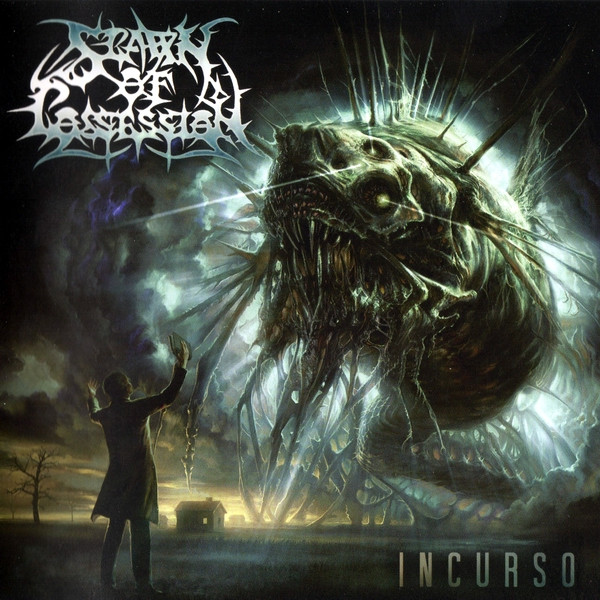
Spawn of Possession- Incurso(2012)

Spawn of Possession- Incurso

Since we last saw Spawn of Possession in 2006 with Noctambulant, the landscape of Death Metal has seen a drastic change.  Let's step into the Way-Back Machine, to a different era with a different sound.  It's not quite the TARDIS, but it will do.

When Spawn of Possession were in their heyday during the early part of the century, Death Metal was a genre where pushing the limits of speed, technicality and tempo were the standard, not the exception.  Bands like Necrophagist, Augury, Lykathea Aflame and Anata were the modern Titans, and most Death Metal fans( at least the ones I knew) worshiped at the altars of Suffocation, Gorguts, Atheist and Cryptopsy.  Death Metal didn't just flirt with Jazz and Classical music, they were starting to become attached at the hip.  Rampant experimentation was commonplace, and the sheer technical prowess of the musicians in these bands rivaled musicians in any genre.  Death Metal was becoming a bit of a thinking man's genre, much to the chagrin of old-school purists, who quickly and loudly decried the end of Death Metal.

But the times have changed, or perhaps more accurately reverted.  Those temples to the likes of Suffocation and Gorguts have long been sacked and torn asunder.  Now the land is once again filled with monuments to Incantation, Angelcorpse and Entombed, and Death Metal has largely returned to the sounds of the late 80's and early 90's.  Experimentation still exists, but even these bands have roots in classic, well worn sounds long ago established by a group of aging musicians, whose bands now seem to be reforming left and right(Purtenance, Dominus Xul and Uncanny have all returned from the grave very recently).

Now, I'm not going to argue about whether this is a good or a bad thing(in this writers opinion, it's both), but it is the reality of the current Death Metal scene.  And needless to say, it's strange timing for Spawn of Possession to return with their first new material in six long years.  It begs the question: does anyone care anymore?  Recent forays by many current Technical Death Metal band closer to the sound Spawn of Possession helped establish have been at best sub-par.  Artist like Obscura, Anomalous and Archspire have not done much to help set up Spawn of Possession's glorious return to the realm, and with Old-School Death Metal now so trendy, how could these members of the Old-New-Guard do much to make an impact?

Incurso does make and impact though.  Boy does it ever, mostly by reminding everyone that the "Death Metal" part is still more important than the "Technical" part, no matter how brain-meltingly technical an album is.  And trust me, Incurso is just that: inhumanly precise,  Jazzy and wonderfully complex.  Tempos and riffs shift at light-speed, tearing across a galaxy of immeasurable complexity, eviscerating quasars and spewing their luminescence across the galactic horizon.  The bass work is, as to be expected, is beyond compare: Erland Caspersen dominates this record, and the intro to "Spiritual Deception" is just incredibly awesome thanks to his effortlessly technical style.  The rest of the instruments follow suit, and there is little doubt that the members of Spawn of Possession are some of the finest musicians on the planet.

Still, there are a lot of amazing musicians out there, and just because you can play doesn't mean you can write.  But it's the writing on Incurso that makes stand head and shoulders above many of the bands modern contemporaries within this style of Death Metal.  For starters, Incurso stays brutal, heavy and aggressive through-out.  Sure, things get Jazzy and melodic, but the album never stops being heavy and nasty from a song-writing perspective.  Spawn of Possession also find a way to keep things drenched in a layer of atmosphere, effectively using dissonance, melody and even the rare electronic or keyboard segment to give the entire album an air of cosmic creepiness.  "Apparition" makes the most effective use of these elements, and it proves to be one of the most atmospheric and creepy songs on the album, evoking a chorus of alien horrors in a chapel made from the dead husks of ancient moons. From a technical and song-writing perspective, Incurso delivers where releases from bands like Obscura and Fleshgod Apocalypse have failed miserably.

The same issue I had with the unquestionably brilliant Noctambulant rears it's head once again on Incurso however: an obnoxiously clean guitar sound that takes more from the album than it gives back.  I understand why this happens: if you work this hard and this long on writing some of the most complex riffs in existence, you want people to able to make out each note without losing any in a sea of reverb or distortion.  But some of the very best Technical Death Metal albums in history, if not the best, featured a filthy and nasty production sound: Nespithe, None So Vile, Effigy of the Forgotten, Onset of Putrefaction.  Even Spawn of Possession's first full length album Cabinet was no where near so clean or sterile sounding.  Thankfully, Incurso is not quite as slick sounding as Noctambulant and the drum triggers are far less obnoxious, but Incurso is clean enough to be occasionally annoying

That said, beyond the guitar sound and the ugly cover art(I really cannot stand these Dan Seagrave-inspired covers so many Tech Death and Brutal Death Metal bands use), Incurso is a wonderful return to form for Spawn of Possession.  Death Metal as a scene has no doubt changed since they left, but quality Death Metal will always be the rule that we all go by.  Without a doubt, Incurso is an album of unquestionable quality, brutality and complexity.

Rating: 9/10

Tuesday, September 25, 2012

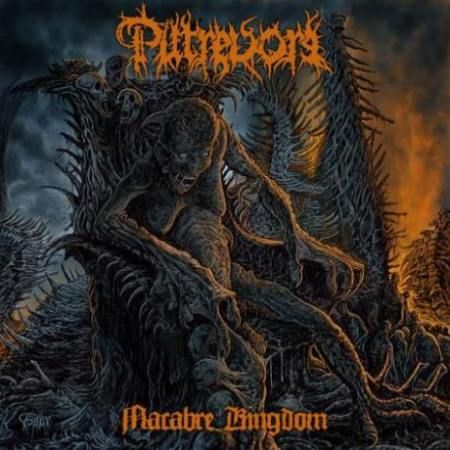
Putrevore- Macabre Kingdom(2012)

Putrevore- Macabre Kingdom

Late in 2010, I discovered Putrevore's debut album Morphed From Deadbreath, and it was love at fist listen.  Tearing itself from the primordial ooze, drenched in slime and embryonic diffuse, Morphed From Deadbreath was a Precambrian beast to be feared.  Firmly entrenched in the Rottrevore school of down-tuned, gut-bucket brutality, it was a worship album that felt more like an extension of the sound than mere imitation.  Rogga Johansson and Dave Rotten, two titans in their own right, had created the single most impressive love-letters to a sadly under-utilized sound I've ever had the pleasure of being skull-fucked by, and it left me wanting more.

But like all primeval, primordial beasts, evolution must take it's course.  Since we last left Putrevore stewing in a pit of bile and muck, much has changed: the claws have become sharper, the teeth more serrated, the hunting techniques more advanced.  Macabre Kingdom is the definition of a nightmarish predator: massive and hulking indeed, but also in possession of a frightful, instinctual intelligence that sends shivers down one's spine.  Rogga and Rotten have brought their collective experience to the project, writing songs which offer a more diverse pallet of Old-School sensibilities and good ol' American brutality(not bad for a Swede and a Spaniard) than Morphed From Deadbreath.  Rottrevore's trademark sound, revisionist Swedish Death Metal cut free of cheese-tastic melody and guitars tuned to "Black Hole" mixed with strong Proto-Brutal Death Metal elements, remains the core of Putrevore's sound and Macabre Kingdom's devastating assault.  But the two opening tracks, "Mysteries of the Worm Part I and II," give clear indication that this is not more of the same.  Rogga brings his patented Swedish Death Metal vibe to the entire package, but shows a strong understanding of the material by never over-doing it: melody slinks below the torrential riff storms and Rotten's incredible guttural vocal assault, and occasional guitar solos add more to the material than detract from it.  Also present is a healthy dose of Incantation style tremolo picking and Doom-laden devastation, perhaps a bit token for the current era of Death Metal, but executed beautifully here.

That would be more than enough innovation for any band from one album to the next, but Rogga and Rotten must not have been content with even that, and sought to push Putrevore's sound further into new directions.  "Mysteries of the Worm Part II" fit's right in with the modern Occult Death Metal scene, featuring atmospheric keyboards and dark, serpentine riffs that would give Antediluvian nightmares, while "Awaiting Awakening Again" grooves and rumbles like Bolt Thrower and Grave after blowing through two thirty-packs.  Macabre Kingdom doesn't really maintain a consistent tone throughout the album, and instead goes for an all-encompassing view of Death Metal as a whole; it's past and it's present.  There really is something here for everyone, and the fact that Rogga and Rotten can keep the whole album focused and utterly uncompromising over all eight tracks is a monumental achievement.  Rogga has always been known as a "if it ain't broken, don't fix it" kind of guy through his various SwedDeath worship acts, but Macabre Kingdom feels like a coming out party for the gifted guitarist: he deftly and expertly dances between styles and riffs with impressive dexterity and real understanding of the material and the sound.  I never would have guessed that a Putrevore album would be Rogga's most impressive and multifaceted performance, but that's exactly what has happened.  As for Rotten, there is little to be said: this is arguably the most impressive guttural vocal performance on an album since Antti Boman first blew the world's collective dome with his inhuman vocalizations on Nespithe.

I can't imagine Putrevore will remain in the periphery of Death Metal any longer with this release.  Morphed From Deadbreath was brilliant but very niche, as only hardcore fans of the already generally obscure Rottrevore would get much from it.  Macabre Kingdom is truly an appropriate title: the vast appeal of this album will, if justice be served, crown Putrevore as one of the best projects the modern Death Metal scene has to offer.  May they rule with an iron, gory fist.

Rating: 9.5/10

Thursday, September 20, 2012

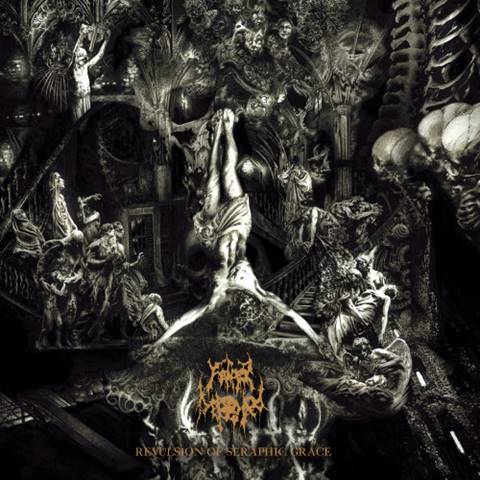
Father Befouled- Revulsion of Seraphic Grace(2012)

Father Befouled- Revulsion of Seraphic Grace

Whether he is summoning pestilential spirits in Black Funeral, divining the bloody remnants of the unborn in Prosanctus Inferi or merely eviscerating the weak in Father Befouled, Jake Kohn is an easy man to figure out: all brutality and death all the time.  Perhaps not the most breathtaking career, but one that has endeared him to the Ross Bay Cult-types and aging Death Metal fans who still think that Technical Death Metal is killing the genre.  Of all three projects, Father Befouled(which he joined after the band formed) stands out as the most "brass-tacks": while Black Funeral routinely delve into dark, creepy ambiance, and Prosanctus Inferi are so brutal and fast as to be alien, Father Befouled... sound exactly like Incantation.  Revulsion of Seraphic Grace is the bands third full-length album of what essentially amount to Incantation-derivatives, as doomy and subterranean as anything Incantation have released, if not anywhere near as classic or intense.  And in fairness, Father Befouled have never tried to be anything but an Incantation clone.  Artwork, song-titles, lyrics; all none-too-clever nods to the Old New Yorkers and their revolutionary and now endlessly imitated style.  So perhaps it's unfair to judge Revulsion of Seraphic Grace as anything but a worship album, a send up to those ancient monsters whom gave life to many a nightmarish soundscape.  If we judge it on this criteria, then were does it stand?

It stands, but barely.

It's not all on the album: Incantation worship has grown painfully stale at this point.  The market has been thoroughly flooded with albums that sound exactly like this, to the point that it's value and listenability has dropped to almost zero.  I'm personally so sick of Incantation worship, it's starting to make it hard to listen to the real thing.  But even taking Incantation out of the equation and merely comparing Revulsion of Seraphic Grace to previous Father Befouled albums, it still comes off as trite and de-fanged.  Compared to 2010's Morbid Destitution of Covenant, Revulsion sounds positively pussy-footed: the production is the bands cleanest and weakest to date, while the tired and breathy vocals are now loud enough to be annoying rather than scenery.  The songs are also universally slower and LONGER, including the ridiculously boring "Triumvirate of Liturgical Desecration," which crawls like a leper with two broken legs across pine-tar for almost 10 minutes.  Such self-indulgent song length for what amounts to a tribute album is just completely unnecessary and even worse, god-damn boring.  Morbid Destitution of Covenant kept things short and simple, allowing for maximum slaughter at maximum efficiency, which is why it remains a favorite among Incantation-worship albums.  For moments at a time, Revulsion delivers some punishing riffs, but the album begins and ends in a blur of "why bother" which is difficult to shake.

At this point, it's hard to imagine we will get much of anything different from Father Befouled: it's what their fans want and it's what these guys want to play.  The cycle is in place and no one is really interested in breaking it, including me.  Death Metal doesn't get much more dank and rotten than it does on Revulsion of Seraphic Grace, so the question becomes: is dank and rotten enough?  Or more importantly, when does dank and rotten just start to mean it stinks like a dead cat by the roadside?

Rating: 5.5/10

Saturday, August 18, 2012

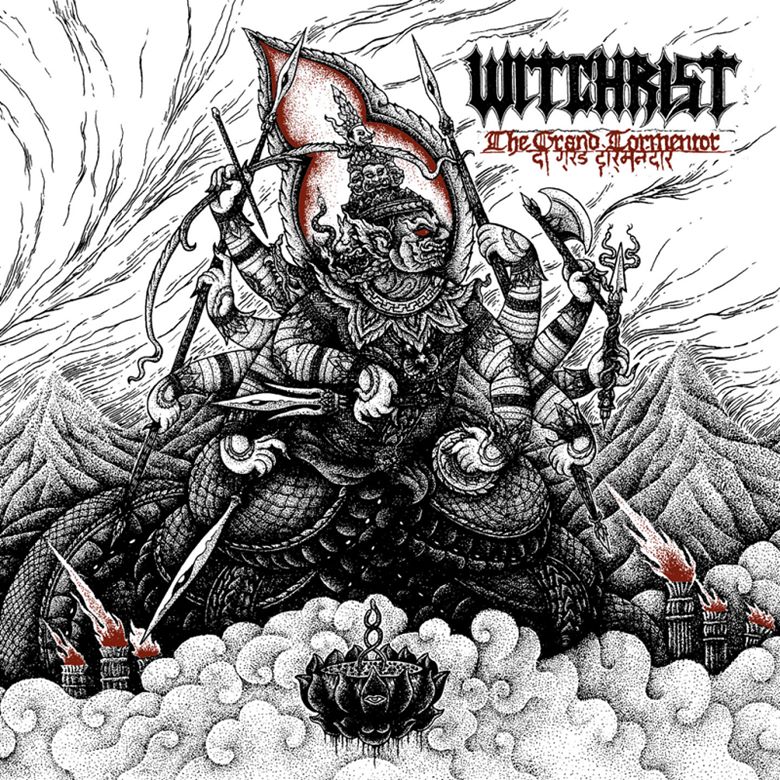
Witchrist- The Grand Tormentor(2012)

Witchrist- The Grand Tormentor

New Zealand's Witchrist first caught my attention with their debut LP Beheaded Ouroborous: a vile progeny or the corpophagous swarm, slithering and sulking beneath the black, dead soil, searching for the sickeningly sweet scent of Death.  It was easily one of the most impressive and enjoyable debuts I have ever had the pleasure to listen to, and left me craving for more.  How surprised I was then that The Grand Tormentor was able to sneak up on me: it hit the distros and blogosphere before I even knew what was happening.  Needless to say, once I got my hands on the album, I was salivating at the chance to be enveloped in the bands next nightmarish evolution.

Sadly, The Grand Tormentor merely reacquainted me with the evils of high expectations.  The album didn't even sound like the Witchrist I knew and loved: instead of the horrifying stew of Archgoat, Incantation and Beherit I was expecting to dine upon, I instead received a pile of ground Bolt Thrower-meets-Asphyx chuck, raw and covered in flies.  Not necessarily a bad thing, but also not what I signed up for either.  Truth is, The Grand Tormentor is a perfectly fine album in it's own right.  The production is wonderful: powerful and static-riddled, each riff landing with sledge-hammer force.  The songwriting also holds up to scrutiny: an easy mix of groove and Doom that will no doubt satisfy big fans of Bolt Thrower and Benediction.  Needless to say, it's got riffs: "Cast Into Fire" is short. groove-laden and heavy, and will no doubt get heads banging and mosh pits thundering, while "The Tomb" will draw many favorable comparisons to Asphyx with it's slow,   monstrous pace and underpinnings of creepy melody.  The Grand Tormentor works well for what it is.

And this is also my biggest issue with the album: The Grand Tormentor is a pretty massive departure from the bands previous work, so much so that I just can't get behind it.  It may not be objective, but then again music is never truly objective: the value of personal preference is vastly under stated when it comes to the analysis of any album, and disingenuous attempts to curtail it's importance are frankly obnoxious.  I simply cannot get into The Grand Tormentor precisely because it is such a massive departure from a direction I vastly preferred.  Gone is the atmosphere and dessicated bleakness of Beheaded Ouroborous, replaced with groovy-riffs and monotonous guttural grunts.  Many have complained about the bands new vocalist, known as Void, because he lacks the range and rawness of the bands previous vocalist Impecator(these two must have been tortured as children with such names...).  I am not one of these people per-se: Void is a very competent growler, and his style fits perfectly with the bands new direction.  My issue with his vocal attack comes from my problem with the band new direction more than his performance.

It's true, "Occult" Black/Death like Witchrist played on albums like Beheaded Ouroborous and Curses of Annihilation has become pretty trendy in Death Metal.  There are a veritable sea of bands dabbling in occult mysterious and impious practices right now, and I can understand any band wanting to separate themselves from the scene.  But why jump from one trendy sound to another?  There are just as many "Old-Skull Death Methul" bands rehashing played out Bolt Thrower and Asphyx riffs as there are grimm, lo-fi C'thulhu Cultists mucking about, so I really don't understand the change.  And at least the "Occult" Black/Death movement is a new one, born from a revival of classic Death and Black Metal perhaps, but none the less a new phenomenon.  Everything about The Grand Tormentor(no doubt a reference to Benediction's The Grand Leveller) feels watered down, from the musical approach to the artwork to the song titles.  The Grand Tormentor will no doubt appeal to a larger audience, but it's also missing something that the bands previous work had in spades: personality.

Much like recent albums from Undergang and Cruciamentum, Witchrist have toned down their evil in favor of a more accessible, well-worn sound.  And like those recent releases, The Grand Tormentor is a solid album for what it is.  And what it is exactly is a large step back, away from downward progression into true nihilism and instead into well tread paths of various beloved forebears.  Competency can only get this album so far, but those who are looking for a head-banging good time should seek out The Grand Tormentor.  For me, I'll wait for more intoxicating whispers from the dark.

Rating: 6/10